Documentation Index
Fetch the complete documentation index at: https://docai.inclusioncloud.com/llms.txt
Use this file to discover all available pages before exploring further.
Configuring SAP Document AI from Scratch in SAP BTP: A Step-by-Step Guide
This guide walks you through the complete process of setting up SAP Document AI in a brand-new SAP Business Technology Platform (SAP BTP) sub-account — from initial sub-account creation all the way through final configuration inside the Document AI system. Each step is documented in sequence, with supporting screenshots to help you follow along accurately.
This guide is intended for SAP BTP administrators, solution architects, and technical consultants who need to provision and configure SAP Document AI in a clean sub-account environment. You should have access to the SAP BTP Cockpit with global account administrator privileges, as well as access to an SAP Cloud Identity Services (IAS) tenant.
Note: This guide covers configuration in a completely new SAP BTP sub-account. If you are working in an existing sub-account that already has some entitlements or instances configured, some steps may already be complete.
What You’ll Learn
- How to create a new SAP BTP sub-account and configure identity provider trust settings
- How to assign the service entitlements, including SAP Document AI service plans and Cloud Foundry environment
- How to enable Cloud Foundry and create a service instance and application subscription for SAP Document AI
- How to configure admin access through SAP Cloud Identity Services (IAS) and assign Document AI role collections to users
- How to configure document retention, Instant Learning, and Data Feedback Collection settings within the SAP Document AI interface
Chapter 1: Configuring Document AI in a new SAP BTP sub-account
This chapter walks you through setting up a brand-new SAP BTP sub-account for Document AI — from creation and trust configuration all the way to enabling Cloud Foundry and assigning the required service entitlements.
Create a new sub-account
Note: In this guide, all sub accounts will be created with the example above for Inclusion Cloud Demo.
Step 1: In the SAP BTP Cockpit, go to Account Explorer in the left navigation pane.
Step 2: Click Create to open the “Create Subaccount” dialog, then fill in the following details:
| Field | Value |
|---|
| Display Name | InclusionCloudDemo01 |
| Region | US East (VA) - AWS |
| Subdomain | inclusionclouddemo01 |
| Parent | Your parent location |
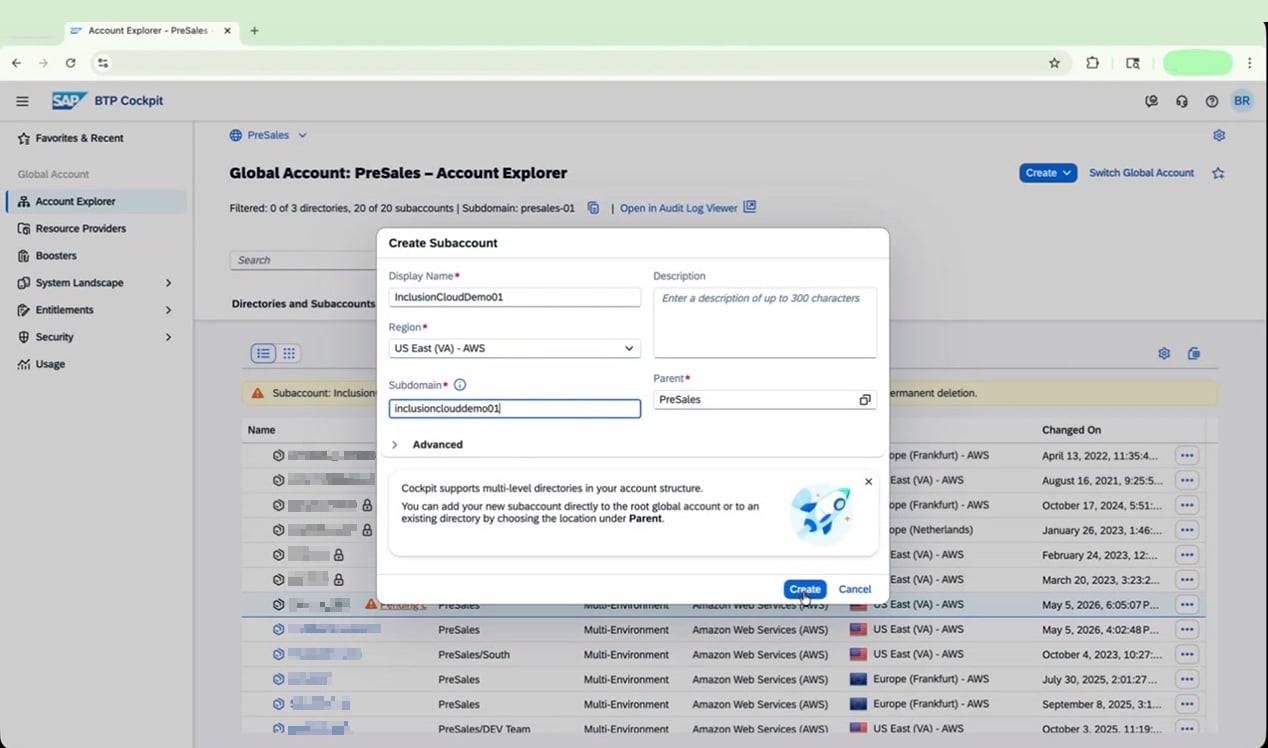
Leave all other fields at their defaults.
Step 3: Click Create to finalize the sub-account.
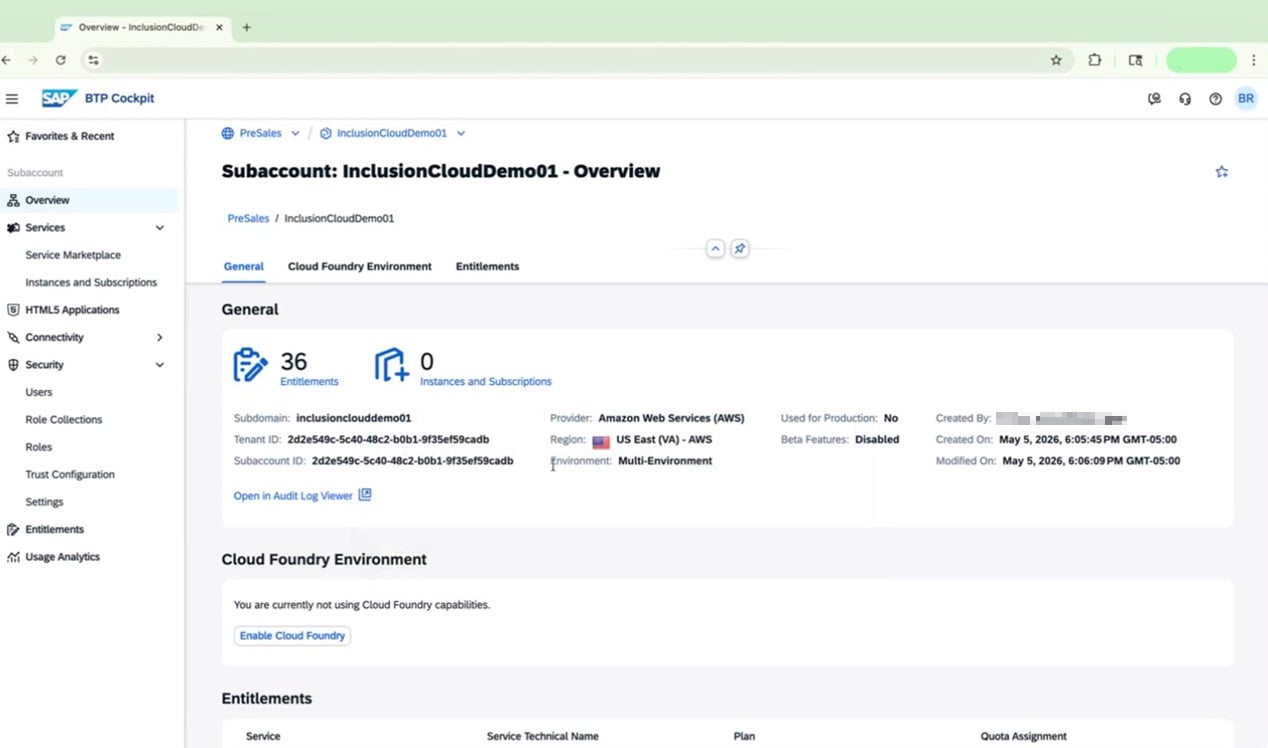
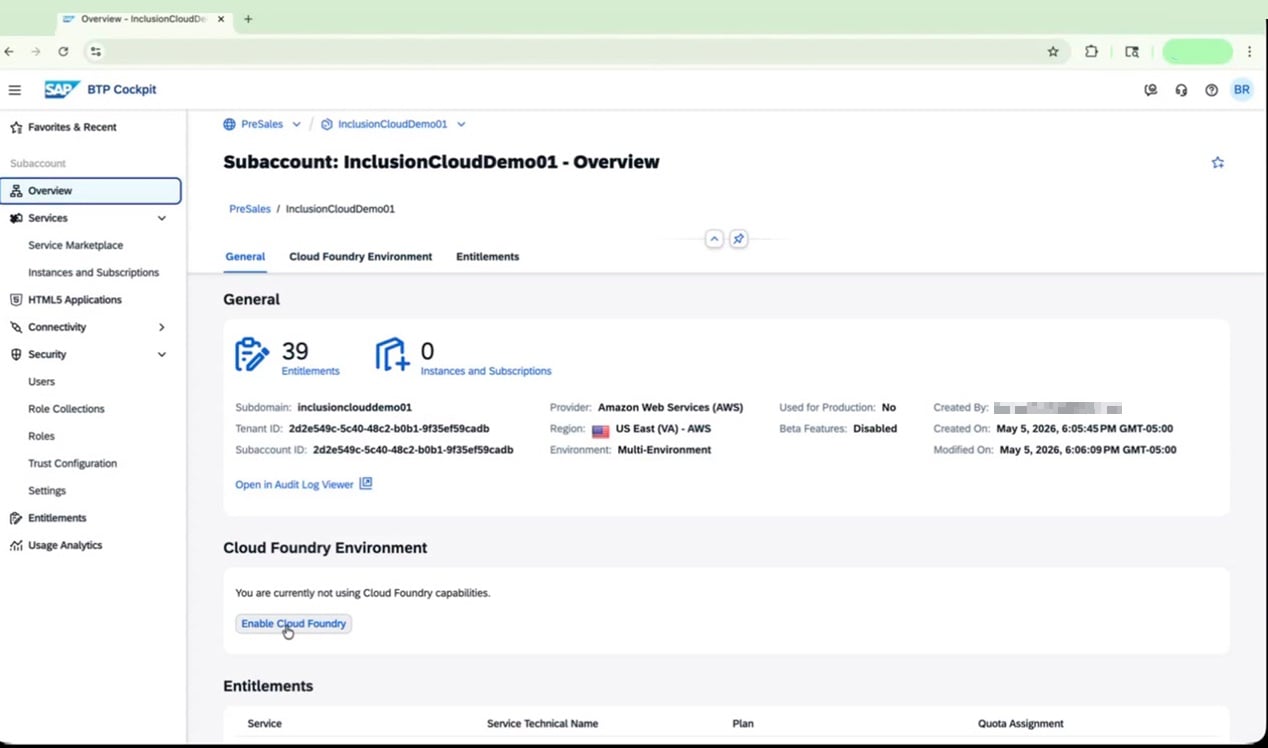
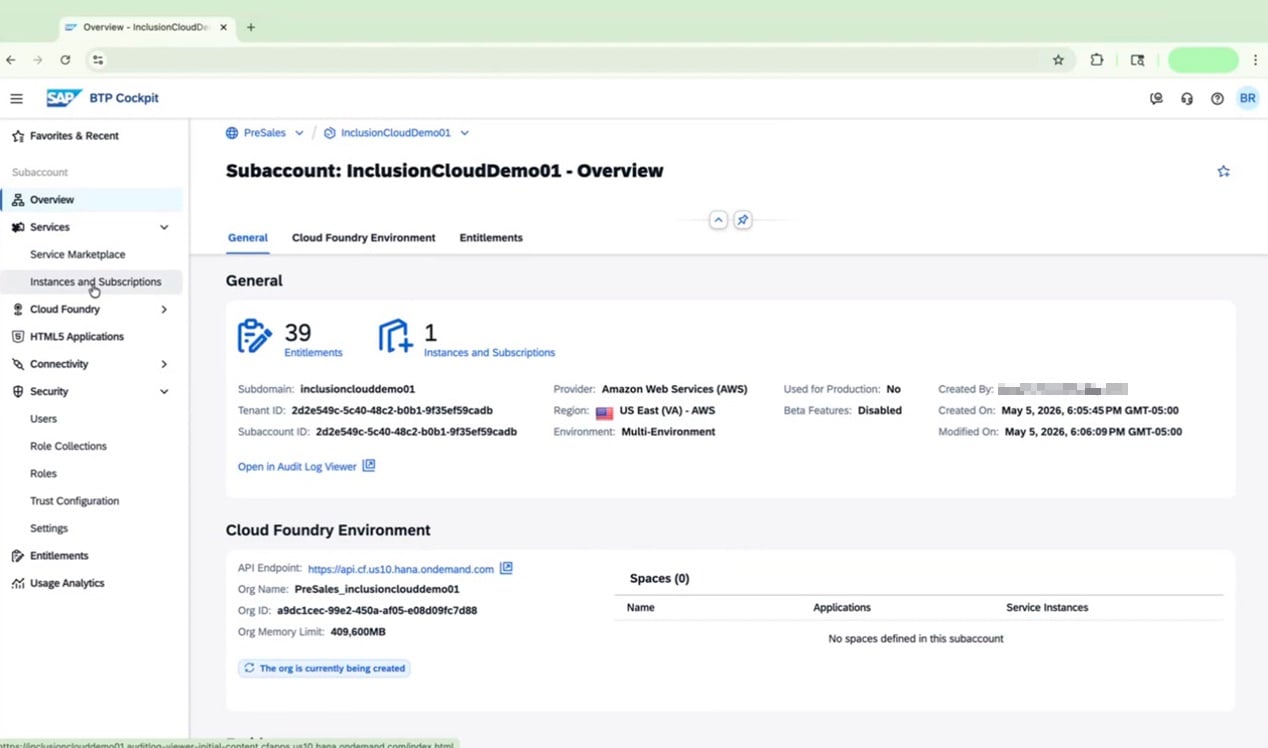
Step 4: Once created, click on InclusionCloudDemo01 in the Account Explorer list to open its overview page and confirm the details:
- Subdomain: inclusionclouddemo01
- Provider: Amazon Web Services (AWS)
- Region: US East (VA) - AWS
- Environment: Multi-Environment
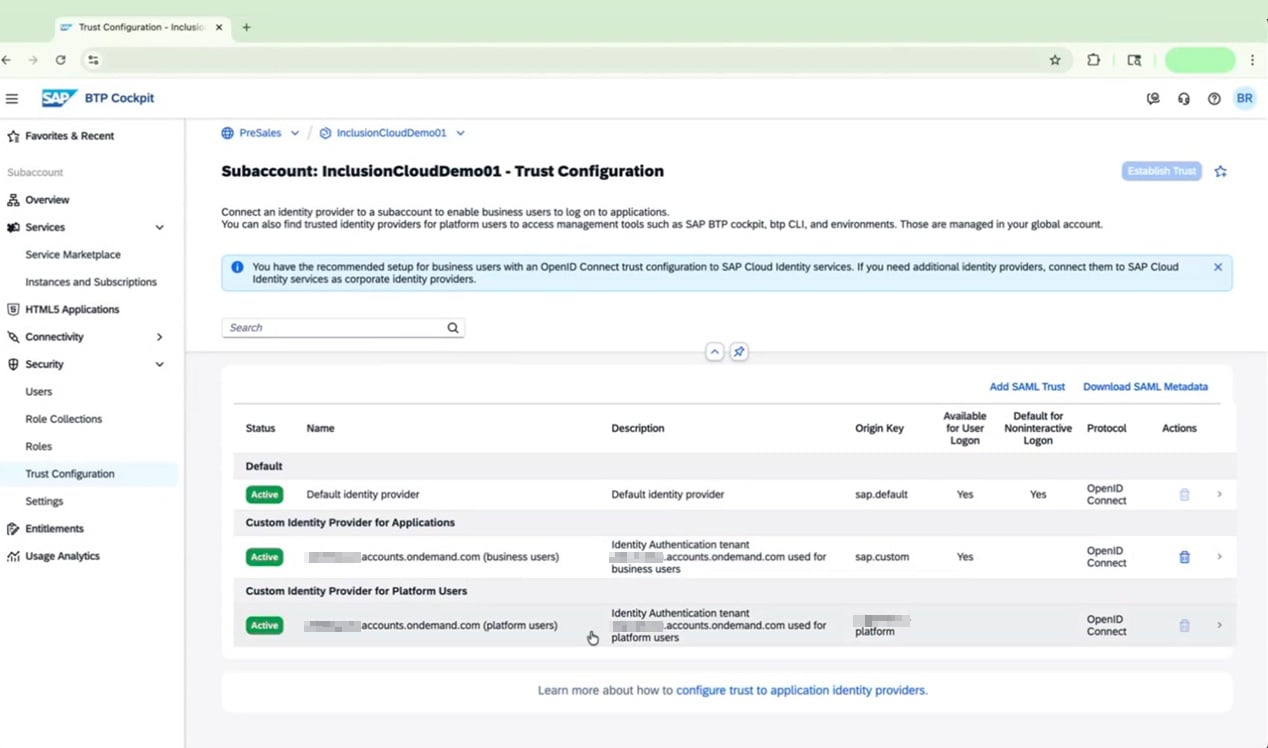
Step 5: In the left navigation, go to Security > Trust Configuration.
Step 6: Review the current trust settings. If a Custom Identity Provider for Applications (business users) is not yet present, click Establish Trust.
Step 7: In the Configure Tenant wizard, complete each step:
- Step 1 – Choose Tenant: Select the appropriate SAP Cloud Identity tenant from the list (for example,
XYZ.accounts.ondemand.com), then click Next.
- Steps 2–4 – Main information, parameters, and review: Confirm the details on each screen, then click Finish.
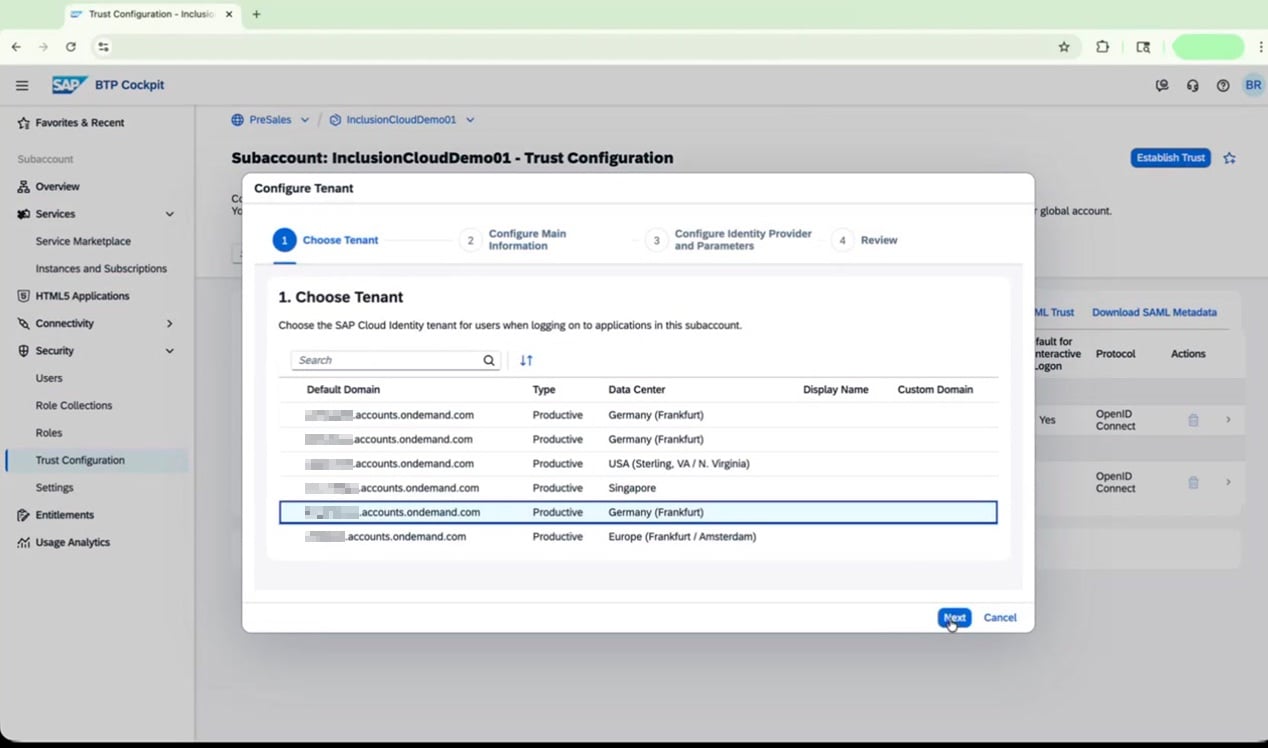
Step 8: When the wizard completes, verify that all three identity provider entries are listed as Active on the Trust Configuration page:
- Default identity provider
- Custom Identity Provider for Applications (business users)
- Custom Identity Provider for Platform Users
Assign entitlements for Document AI
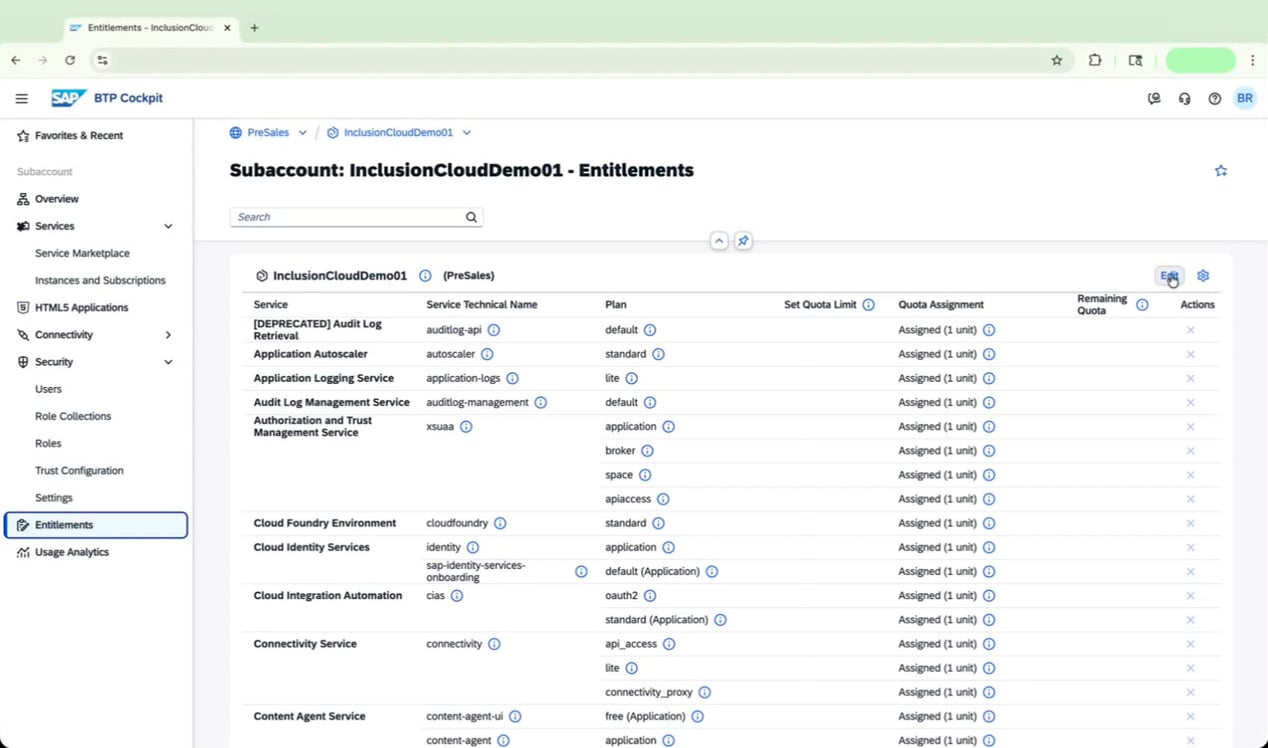
Step 9: In the left navigation, go to Entitlements, then click Edit.
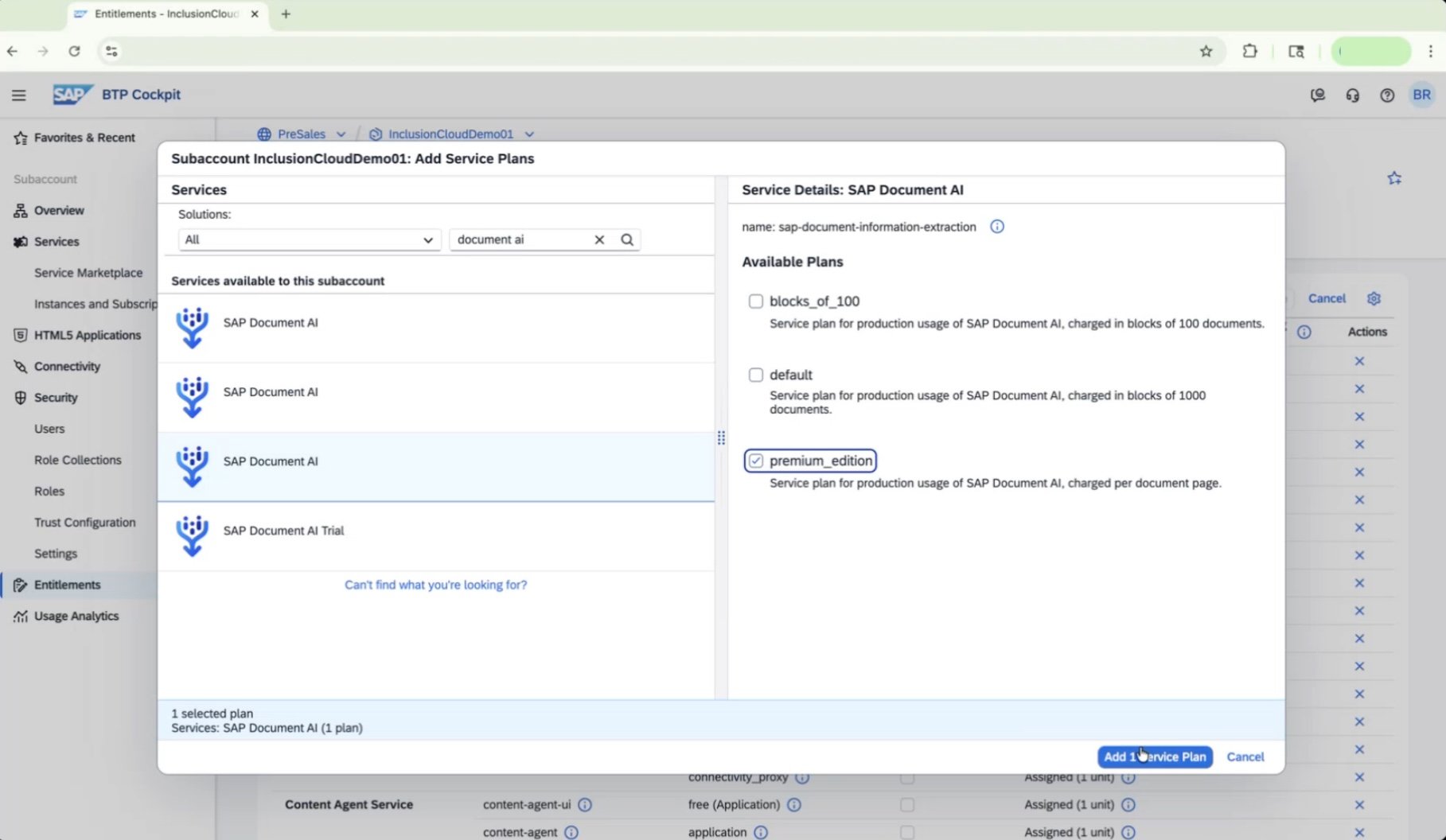
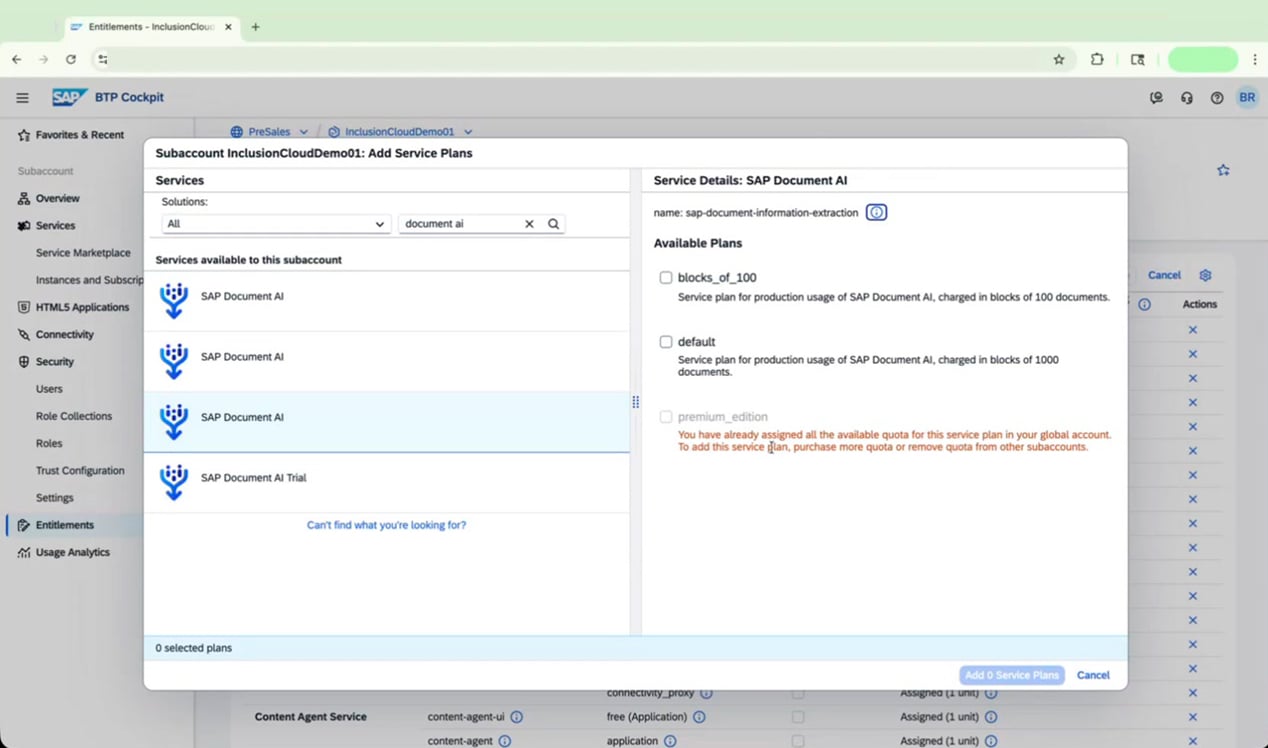
Step 10: Click Add Service Plans to open the service plan selection dialog.
Step 11: In the Services search bar, type document. Select SAP Document AI from the results and review the available plans on the right: blocks_of_100, default, and premium_edition. Check the box with premium_edition.
⚠️ Warning: If you see the message “You have already assigned all the available quota for this service plan in your global account,” you must either purchase additional quota or release quota from another sub-account before you can continue.
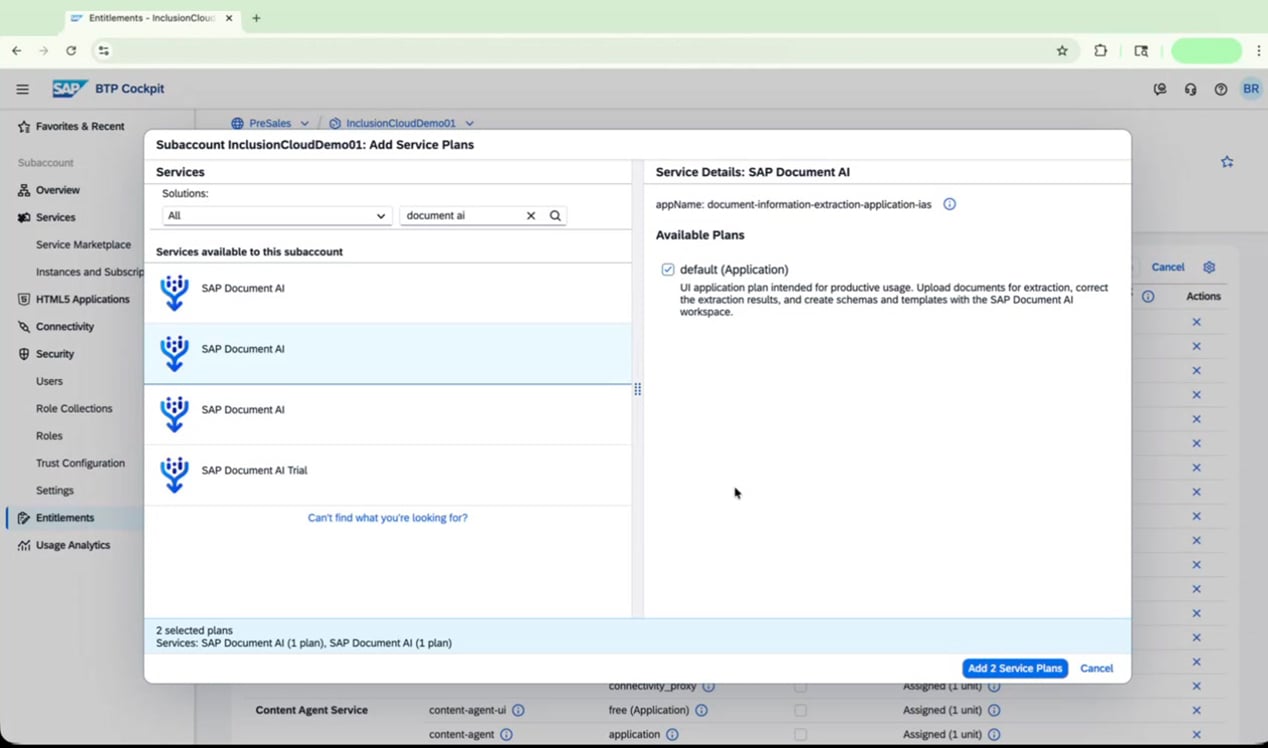
Step 12: Once quota is available, select the correct SAP Document AI entry based on your setup:
- If your customer has IAS configured: Select the entry whose name ends in
-ias (for example, document-information-extraction-application-ias) and choose the premium_edition plan.
- If your customer does not have IAS configured: Select the SAP Document AI entry without
-ias at the end.
In both cases, ensure the default (Application) plan is checked.
Step 13: In the same dialog, clear the search bar and type cloud. Select Cloud Foundry Environment, then choose the build-runtime plan on the right.
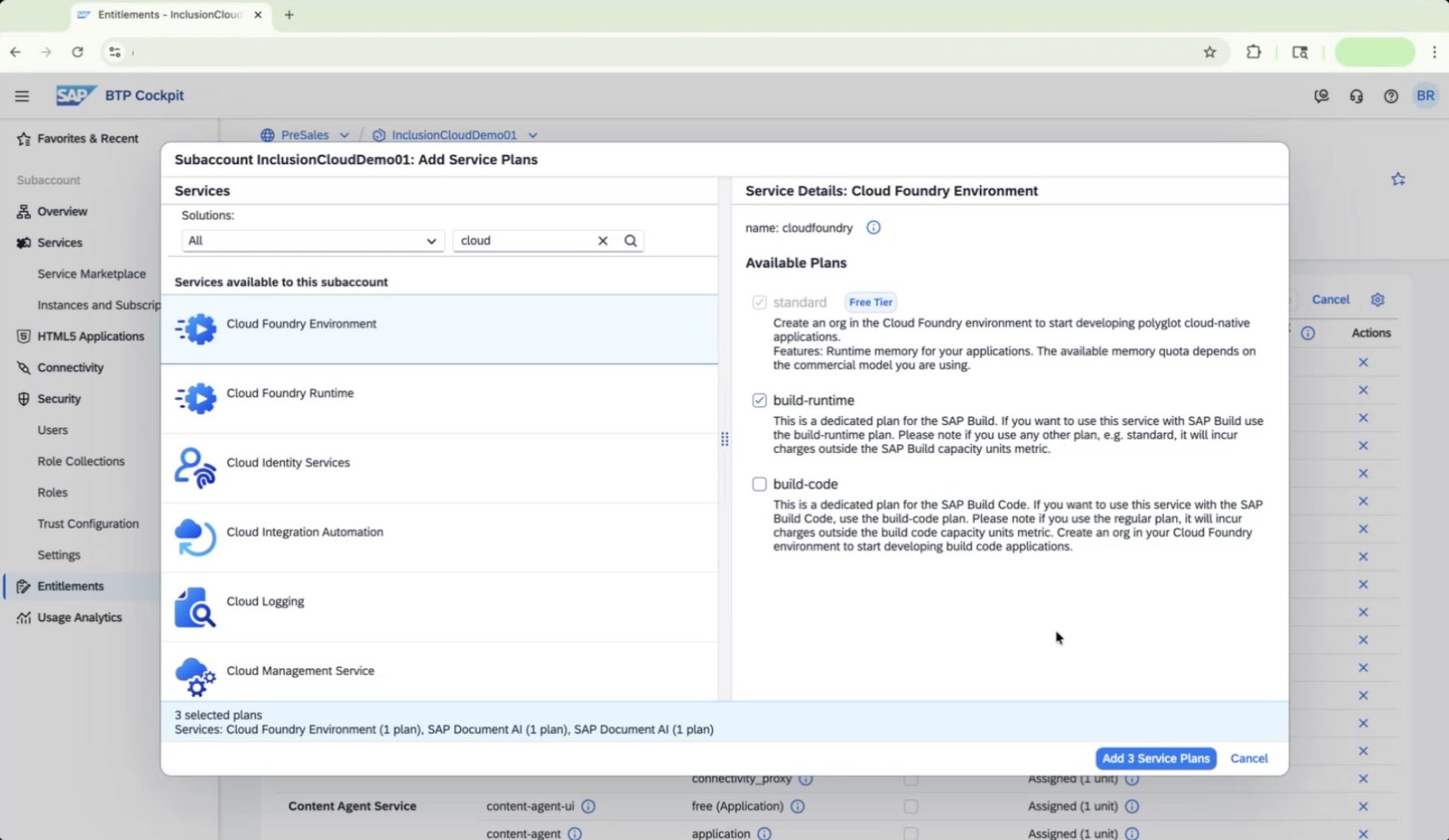
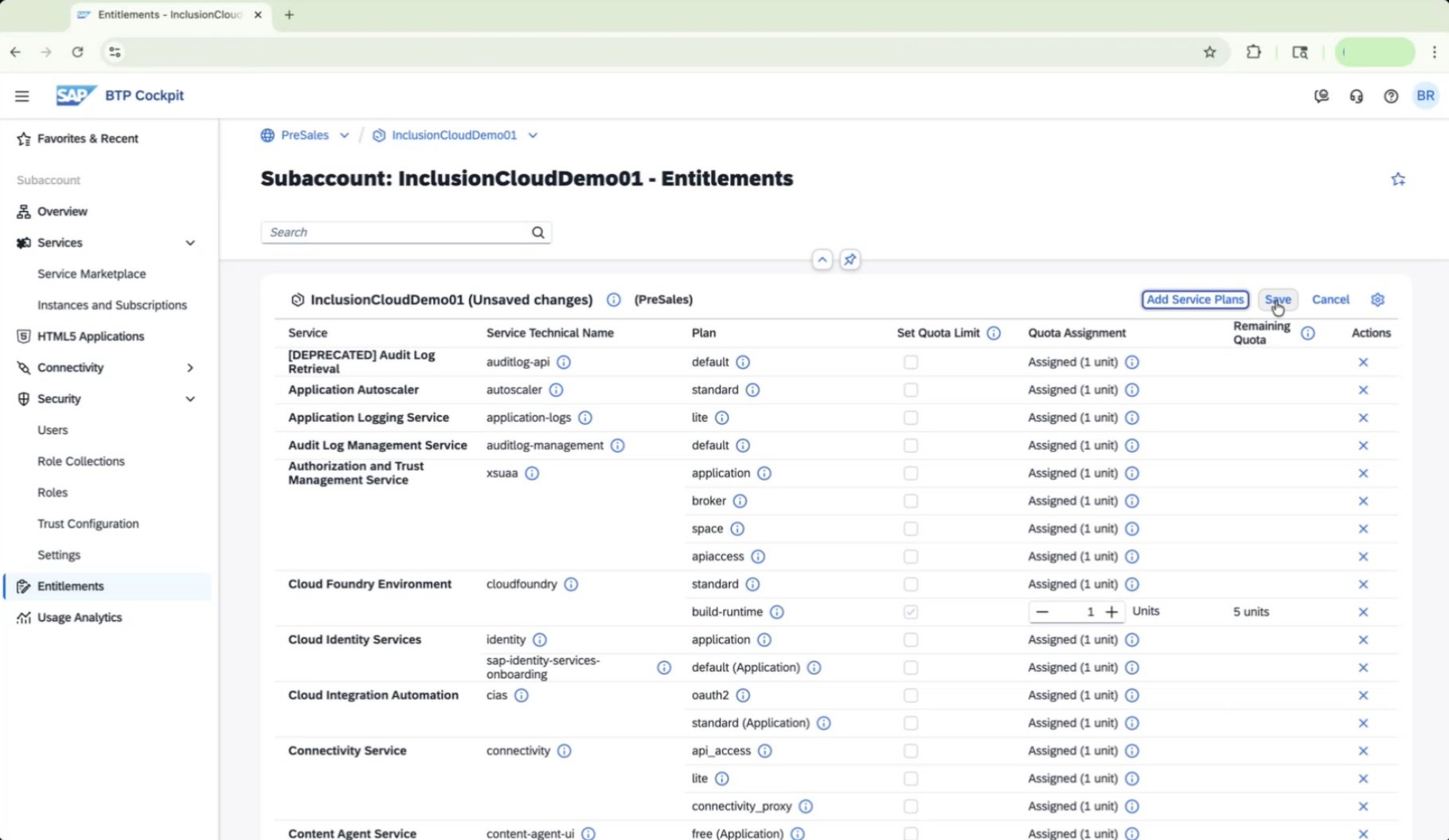
Step 14: Click Add 3 Service Plans to add all selected plans to your sub-account entitlements.
Step 15: Click Save to apply the entitlement changes. The system displays a “Saving assignments” indicator while it processes.
Enable Cloud Foundry
Step 16: Navigate to the Overview tab of your sub-account. Under “Cloud Foundry Environment,” click Enable Cloud Foundry.
Step 17: In the Enable Cloud Foundry dialog, fill in the following:
| Field | Value |
|---|
| Plan | build-runtime |
| Landscape | Your current landscape |
| Instance Name: | inclusionclouddemo01 |
| Org Name | PreSales_inclusionclouddemo01 |
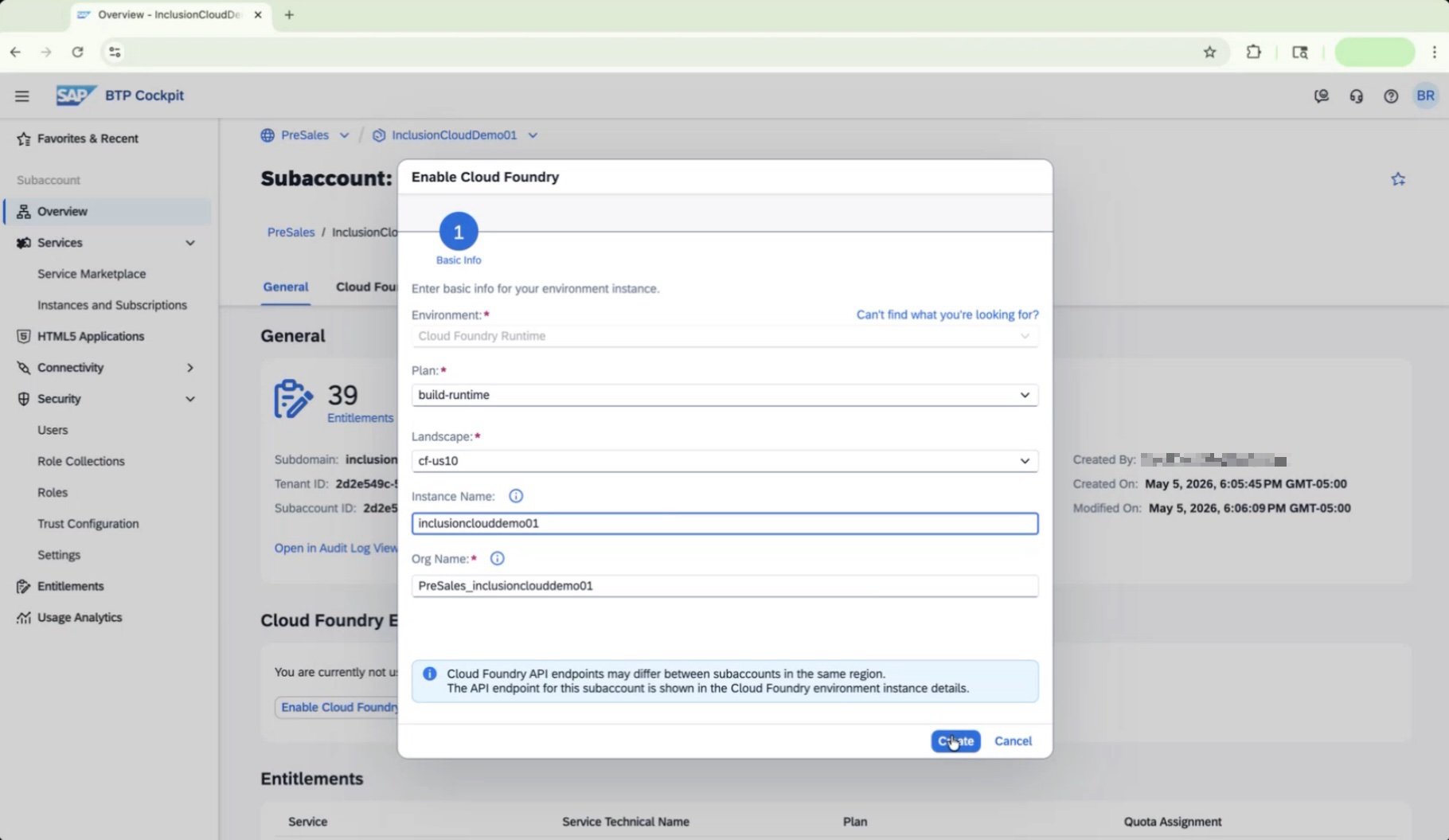
Click Create to activate Cloud Foundry for the sub-account.
Your sub-account is now set up with the correct trust configuration, service entitlements, and an active Cloud Foundry environment. You’re ready to move on to creating service and application instances.
Chapter 2 : Creating service and application instances in SAP BTP Cockpit
In this chapter, you’ll create a service instance and an application subscription for SAP Document AI, set up user access through SAP Cloud Identity Services (IAS), assign the required role collections, and troubleshoot any permission errors you may encounter along the way.
Creating the service instance and subscription
Step 1: Open SAP BTP Cockpit and navigate to your subaccount (for example, InclusionCloudDemo01). You’ll land on the subaccount Overview page, where you can review details such as entitlements, provider, region, and Cloud Foundry environment status.
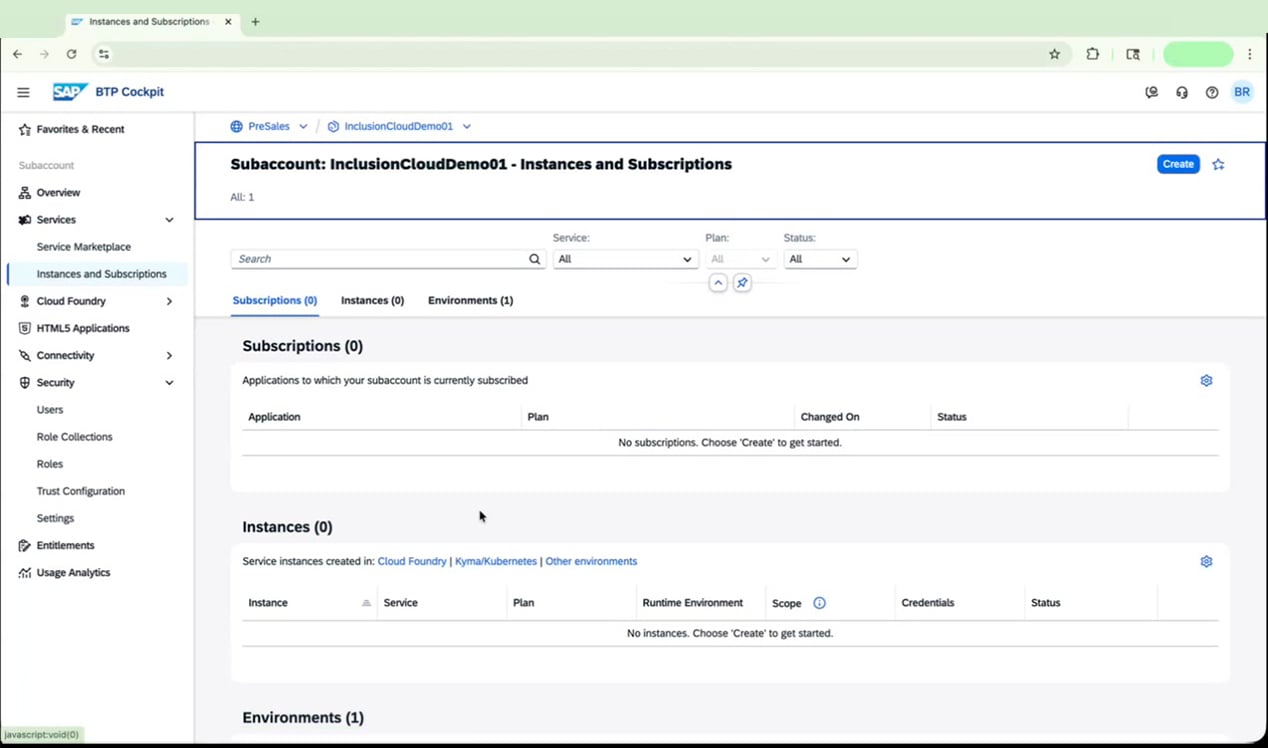
Step 2: In the left navigation pane, go to Services > Instances and Subscriptions. The page will be empty at this point — that’s expected.
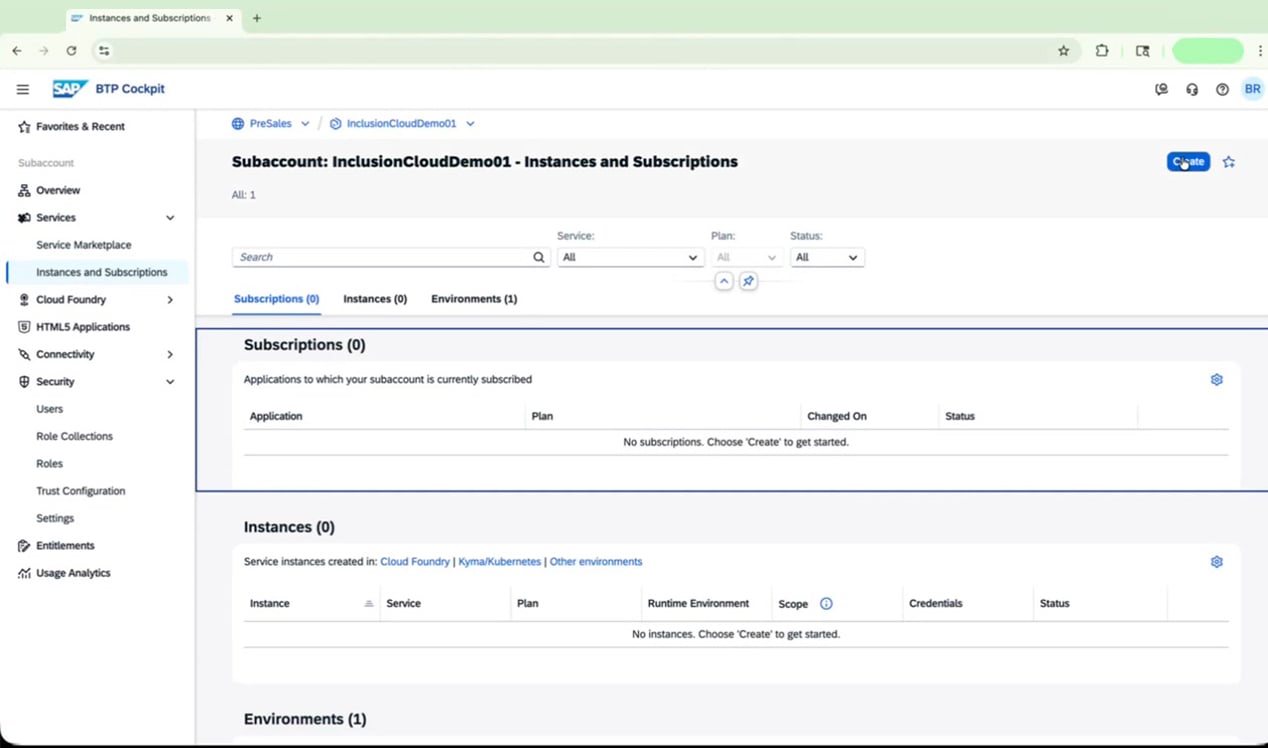
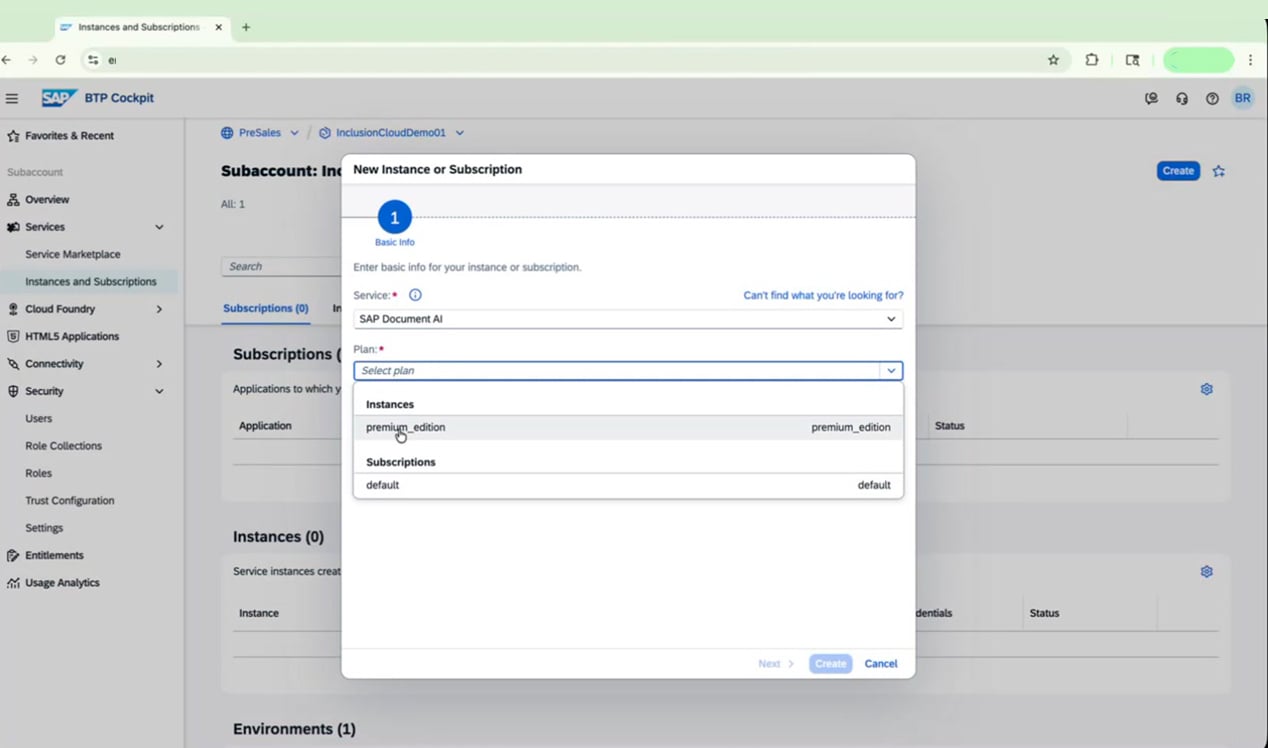
Step 3: Click Create in the top-right corner to open the “New Instance or Subscription” dialog.
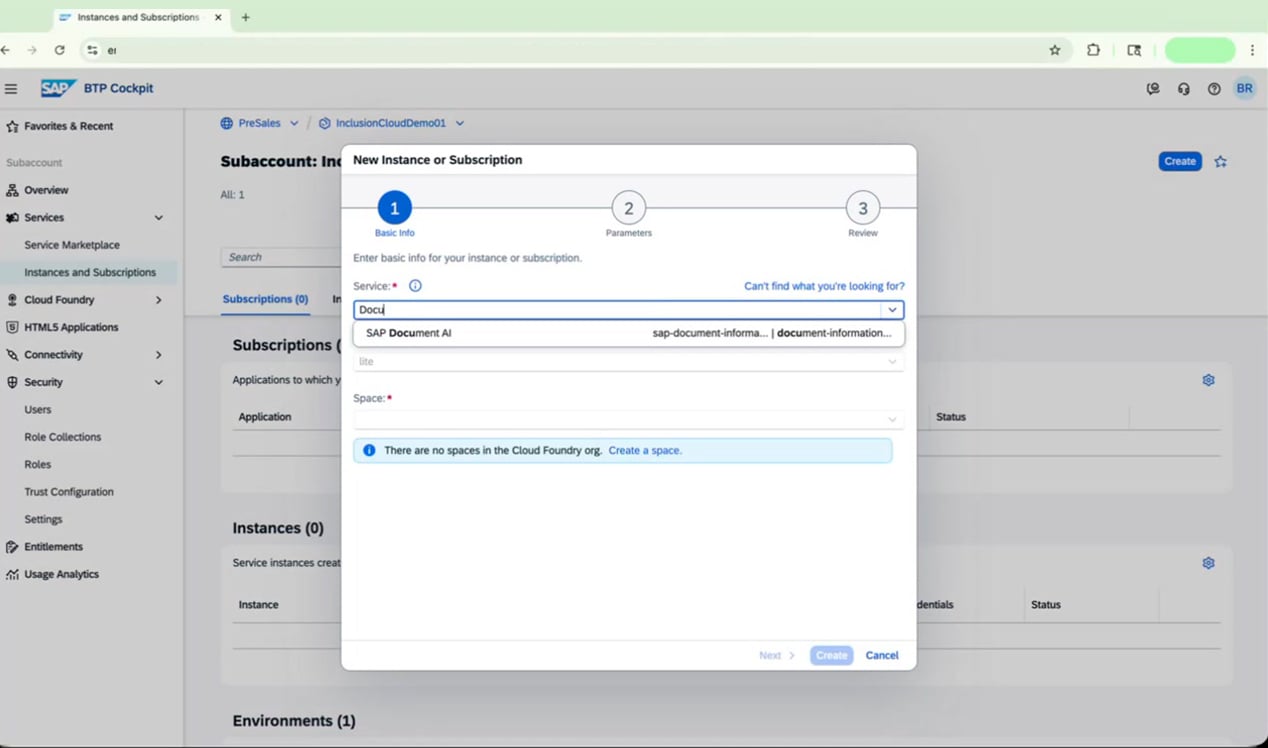
Step 4: In the dialog, select SAP Document AI as the service. If the system prompts you that no Cloud Foundry spaces exist, you’ll need to create one before continuing.
Step 5: For Plan, select premium_edition under the “Instances” section.
Step 6: If no Cloud Foundry space exists, click the Create a space link in the dialog. Enter a name for your space (for example, Dev) and confirm.
Note: This is only necessary if you have not already have one Space available.
Step 7: Complete the remaining fields in the dialog:
| Field | Value |
|---|
| Service | SAP Document AI |
| Plan | premium_edition |
| Runtime Environment | Cloud Foundry |
| Space | Dev (or your chosen name) |
| Instance Name | A CLI-friendly name, e.g. docai-premium |
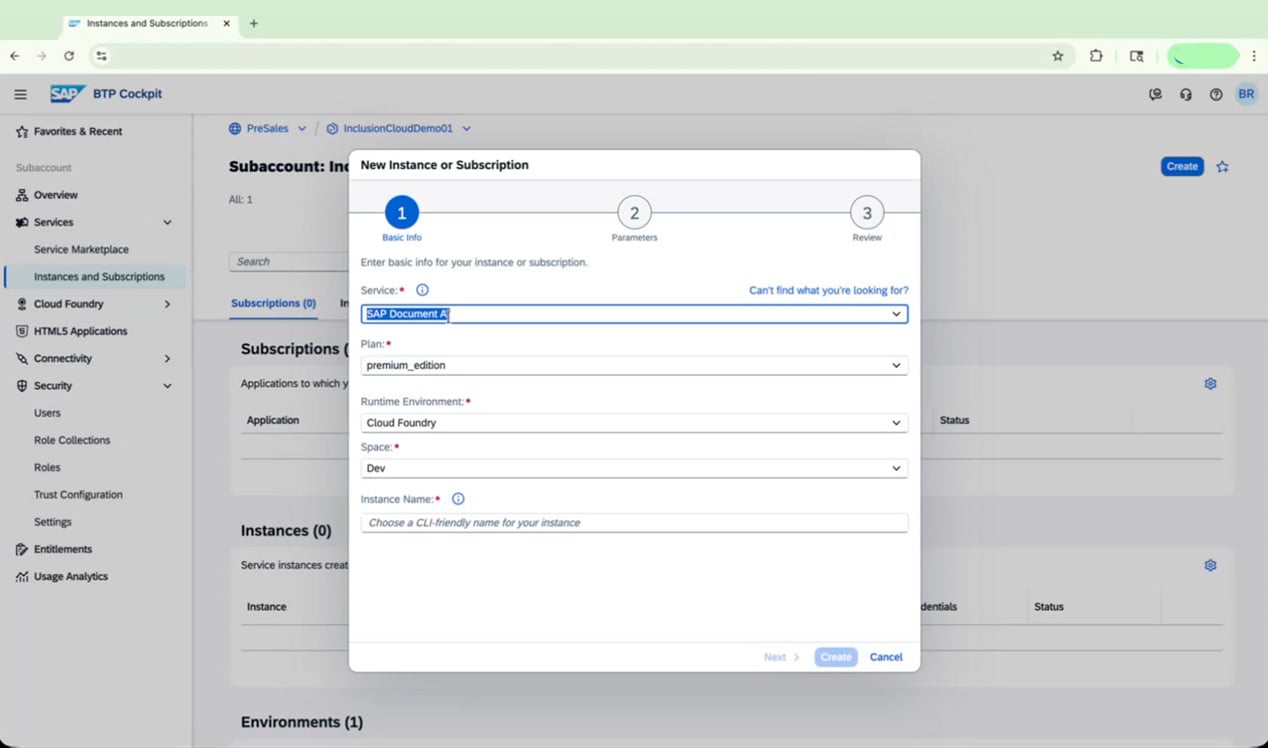
Click Create to submit.
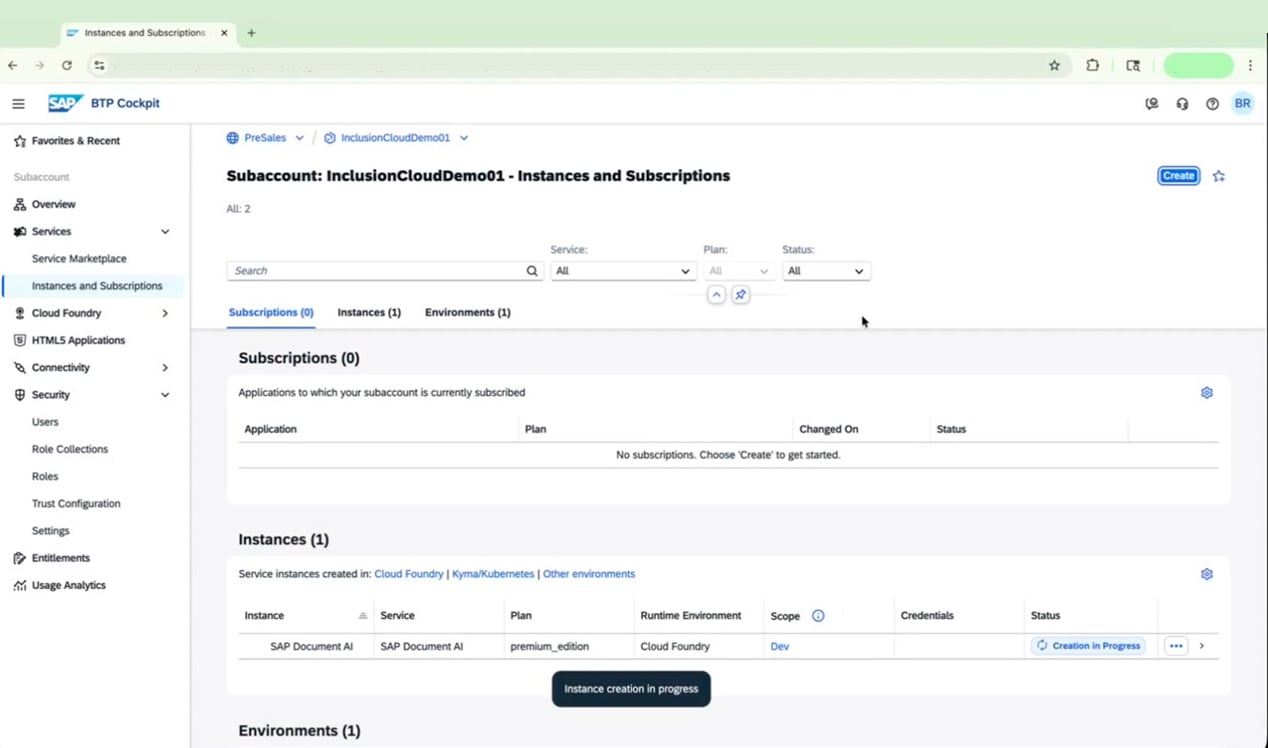
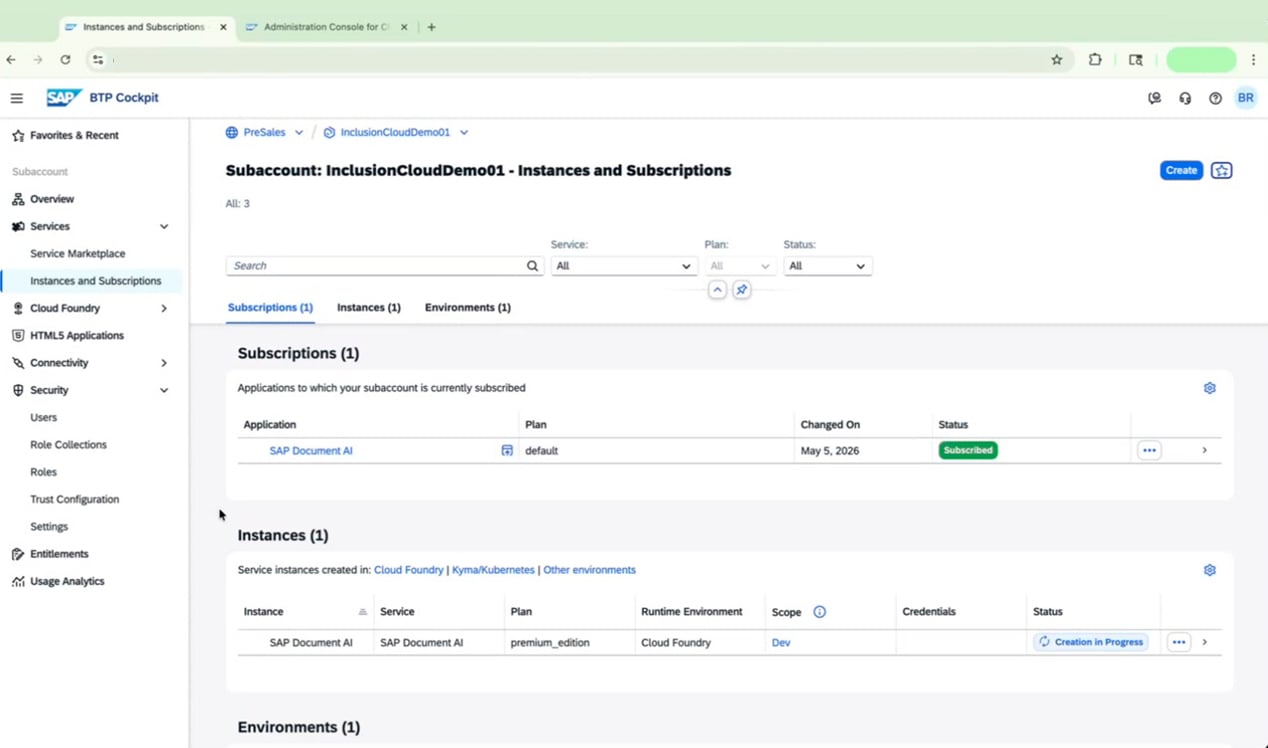
Step 8: Your new instance will appear in the Instances list with the status Creation in Progress.
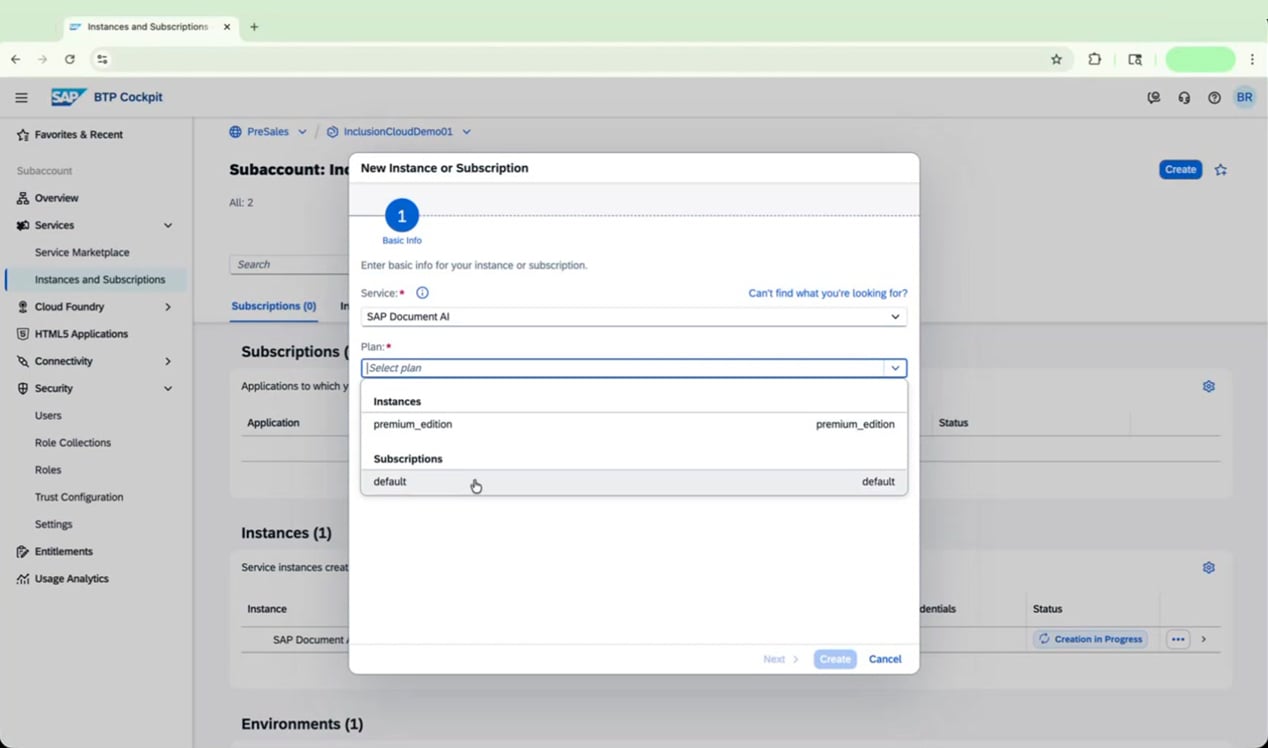
Step 9: Now create the application subscription. Click Create again. In the dialog, select SAP Document AI as the service, then choose default under the “Subscriptions” section for the plan.
Step 10: Click Create to subscribe.
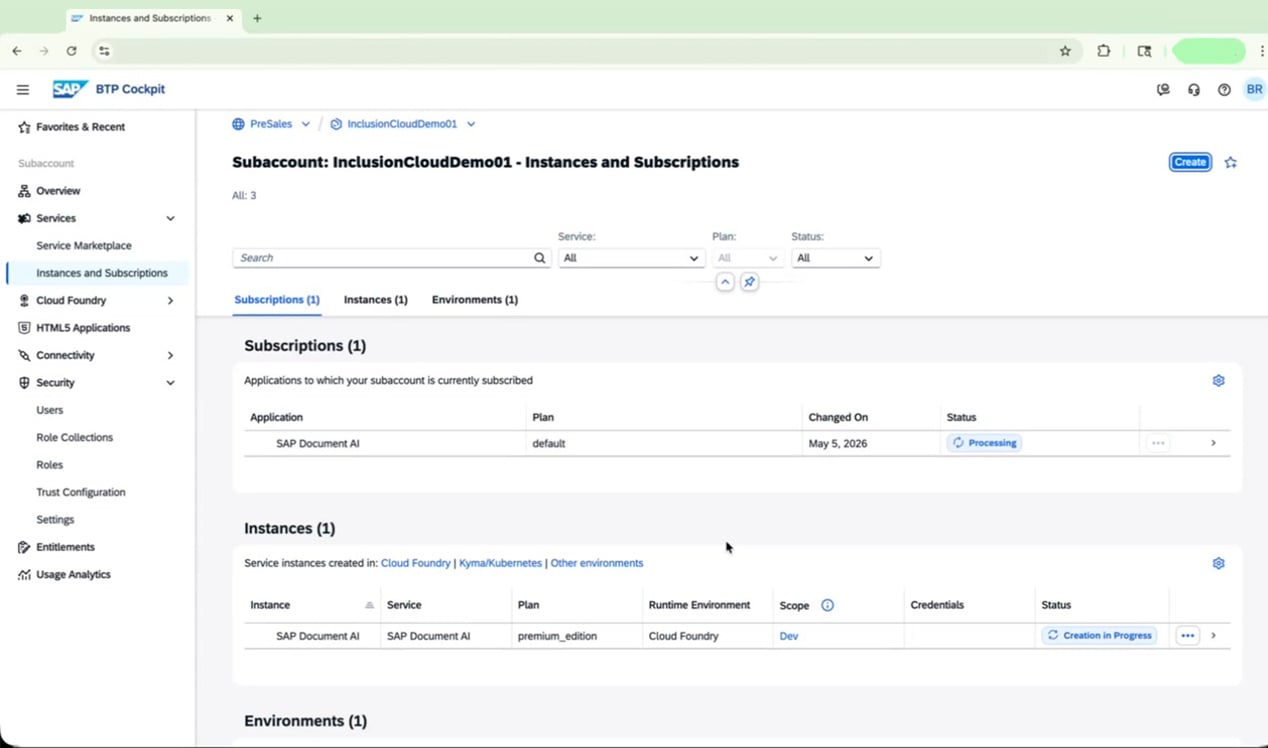
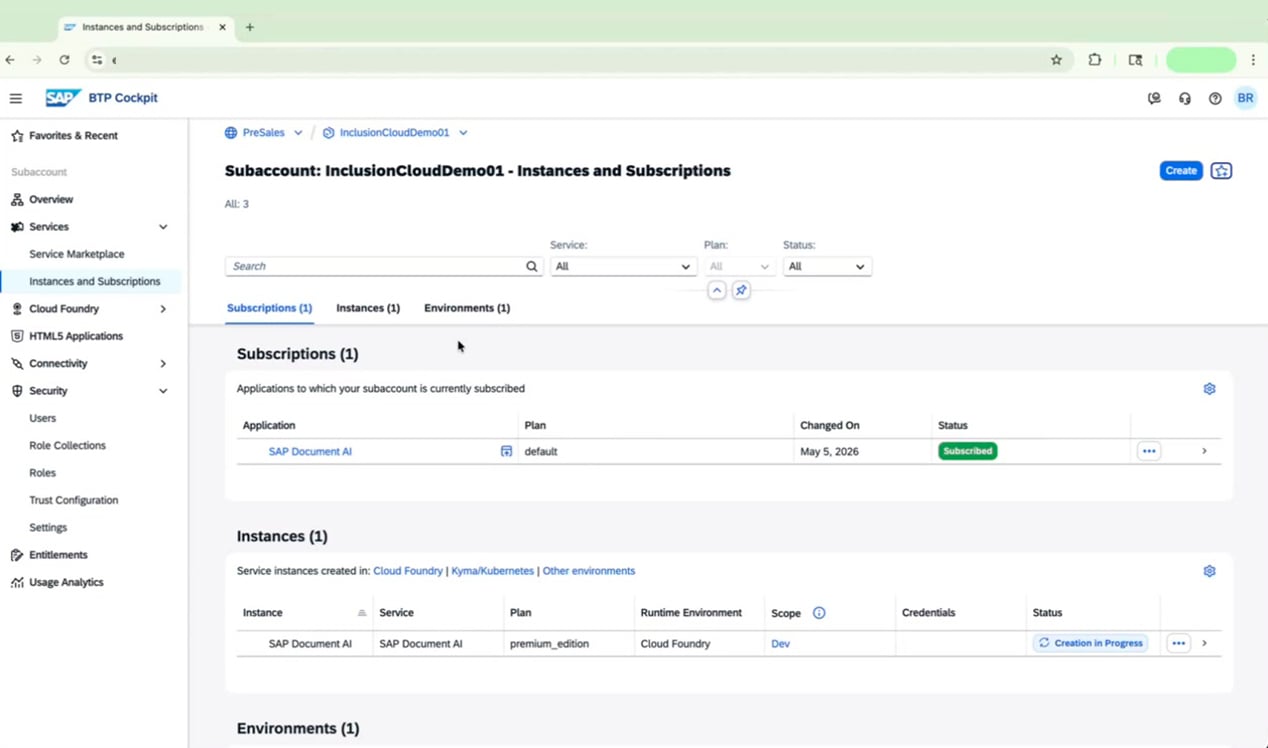
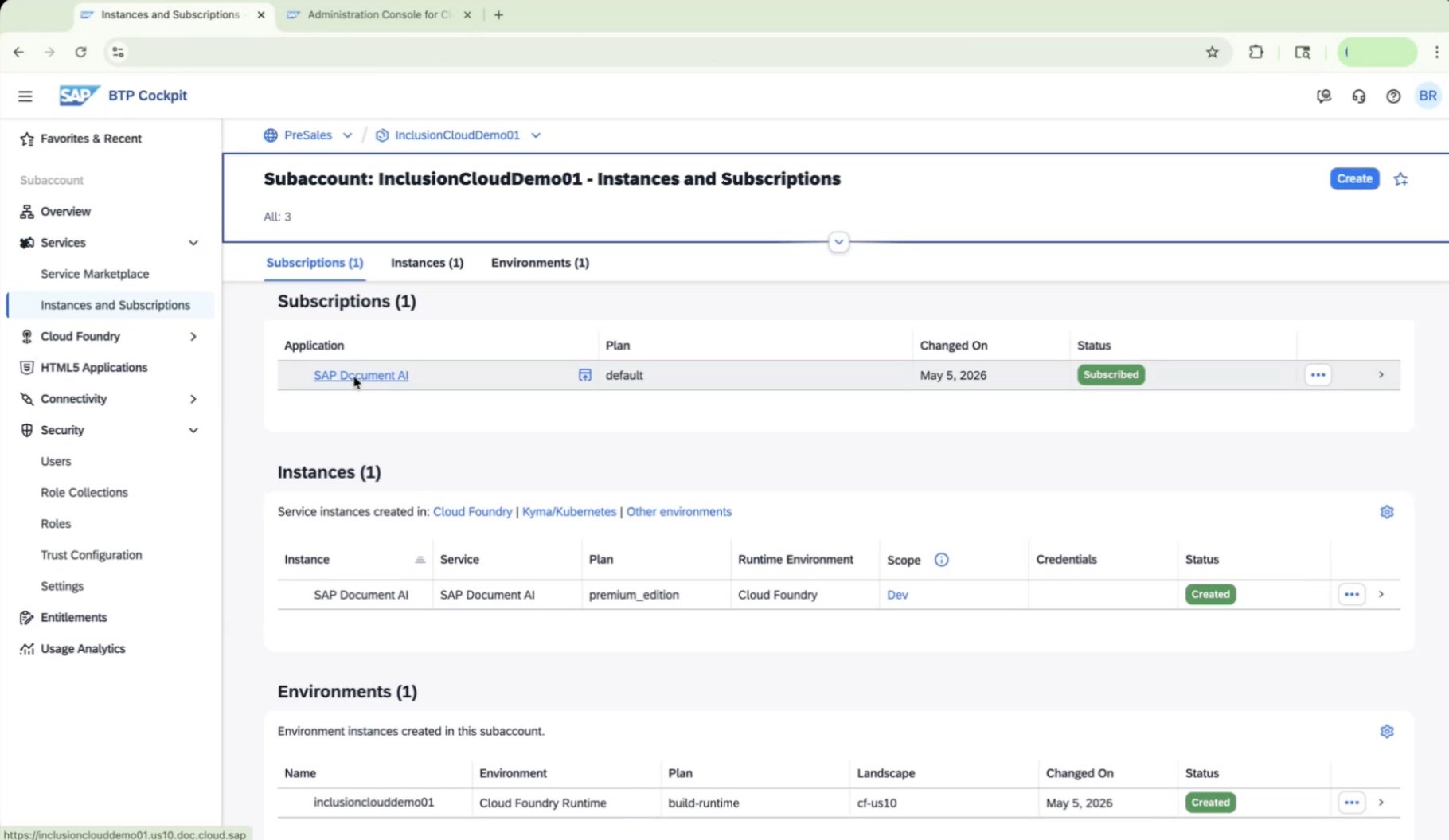
Step 11: Both entries now appear on the Instances and Subscriptions page:
- Subscriptions: SAP Document AI | Plan: default | Status: Processing
- Instances: SAP Document AI | Plan: premium_edition | Status: Creation in Progress
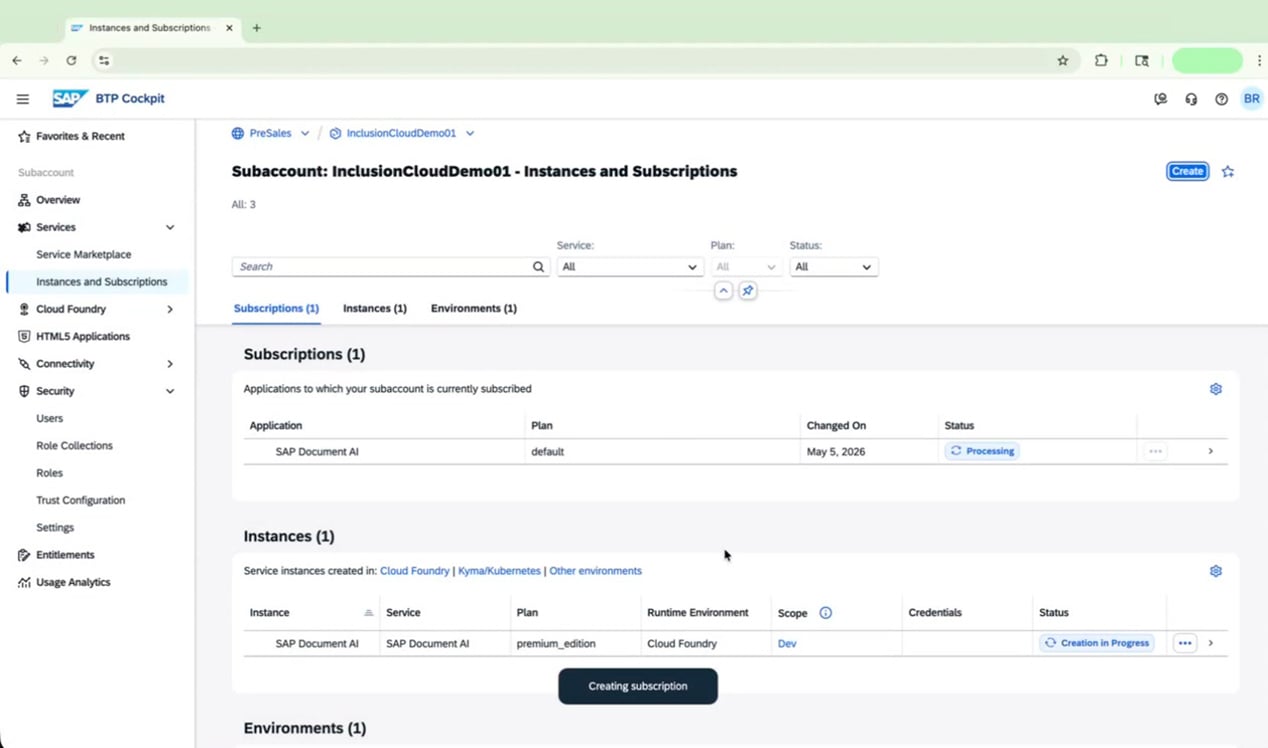
⚠️ Warning: Do not proceed to the next sections until both the service instance and the application subscription have finished processing and show as active. This can take up to 30 minutes.
Configuring admin access in SAP Cloud Identity Services
While you wait for provisioning to complete, you can configure admin access for SAP Document AI through the SAP Cloud Identity Services (IAS) Administration Console.
Step 1: Monitor the Instances and Subscriptions page until the SAP Document AI subscription status changes from Processing to Subscribed. The service instance may still show Creation in Progress at this point.
Step 2: Open a new browser tab and navigate to your IAS Administration Console URL (for example, XYZ.accounts.ondemand.com/admin/). You’ll see the Administration Console Log On screen.
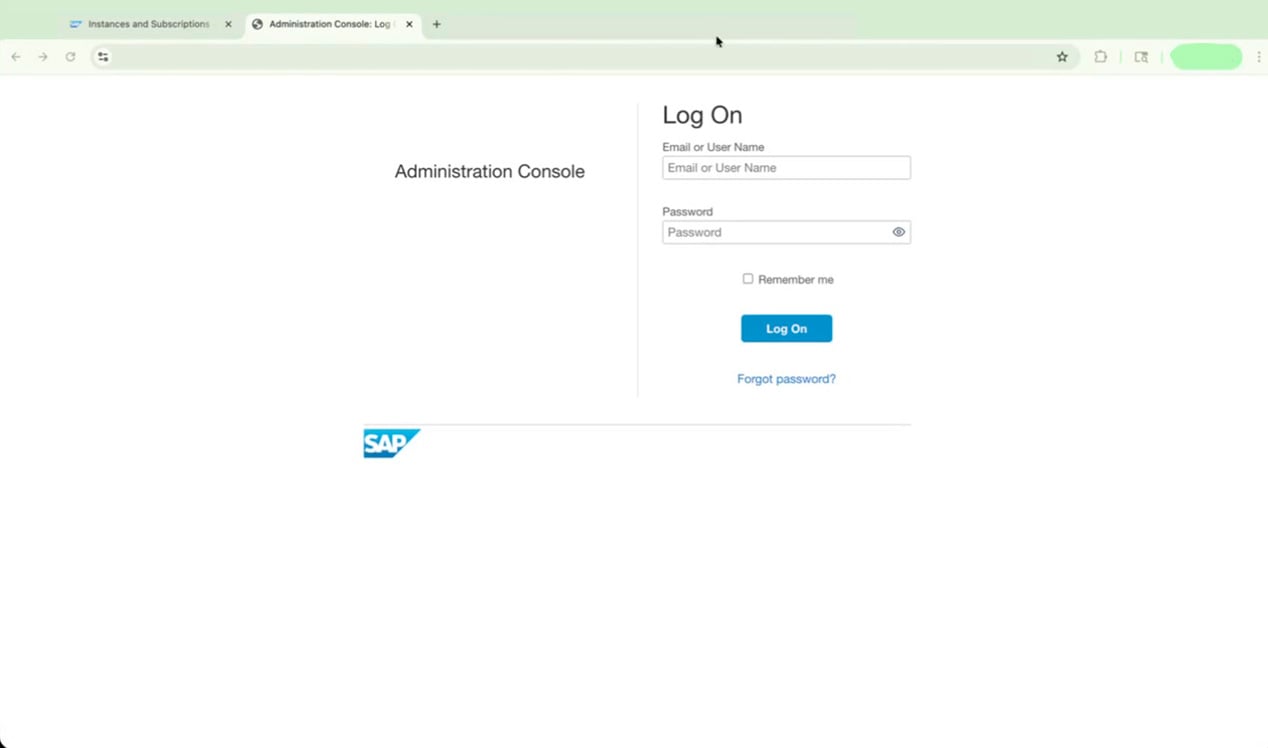
Step 3: Enter your email or user name and password, then click Log On.
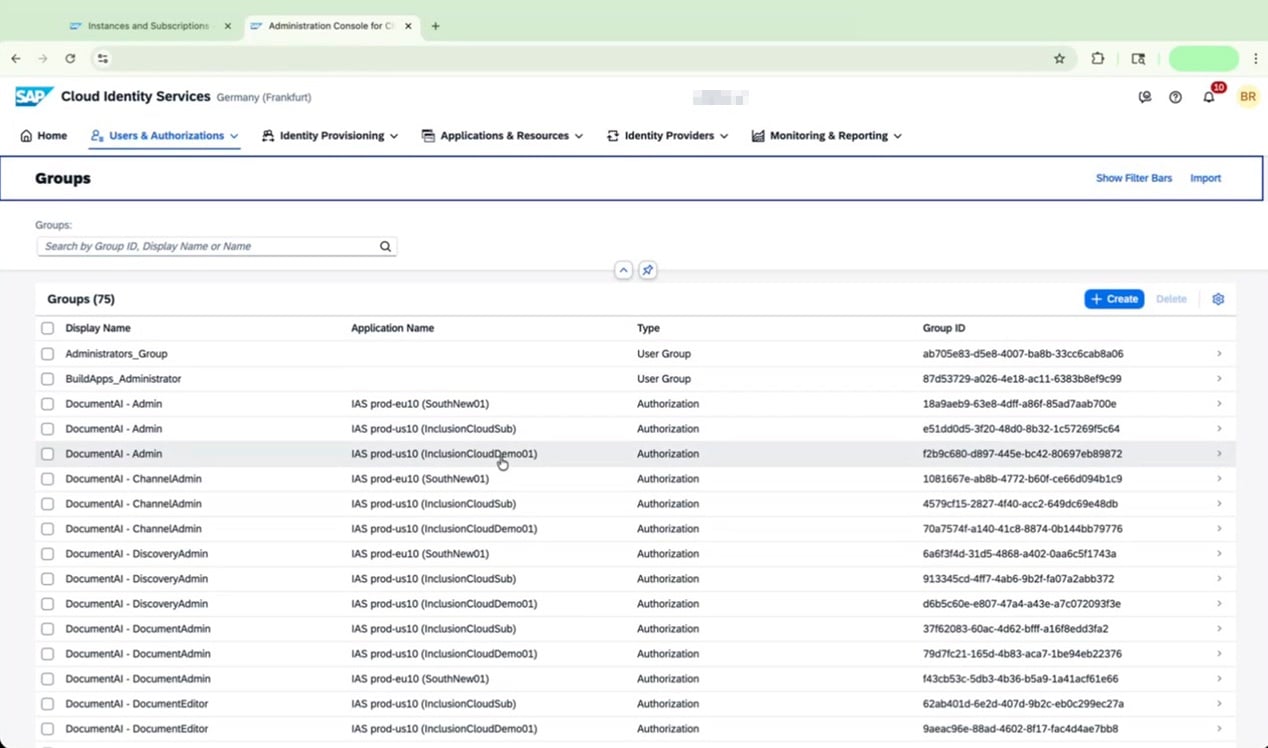
Step 4: Once logged in, go to Users & Authorizations > Groups in the top menu to view all available groups.
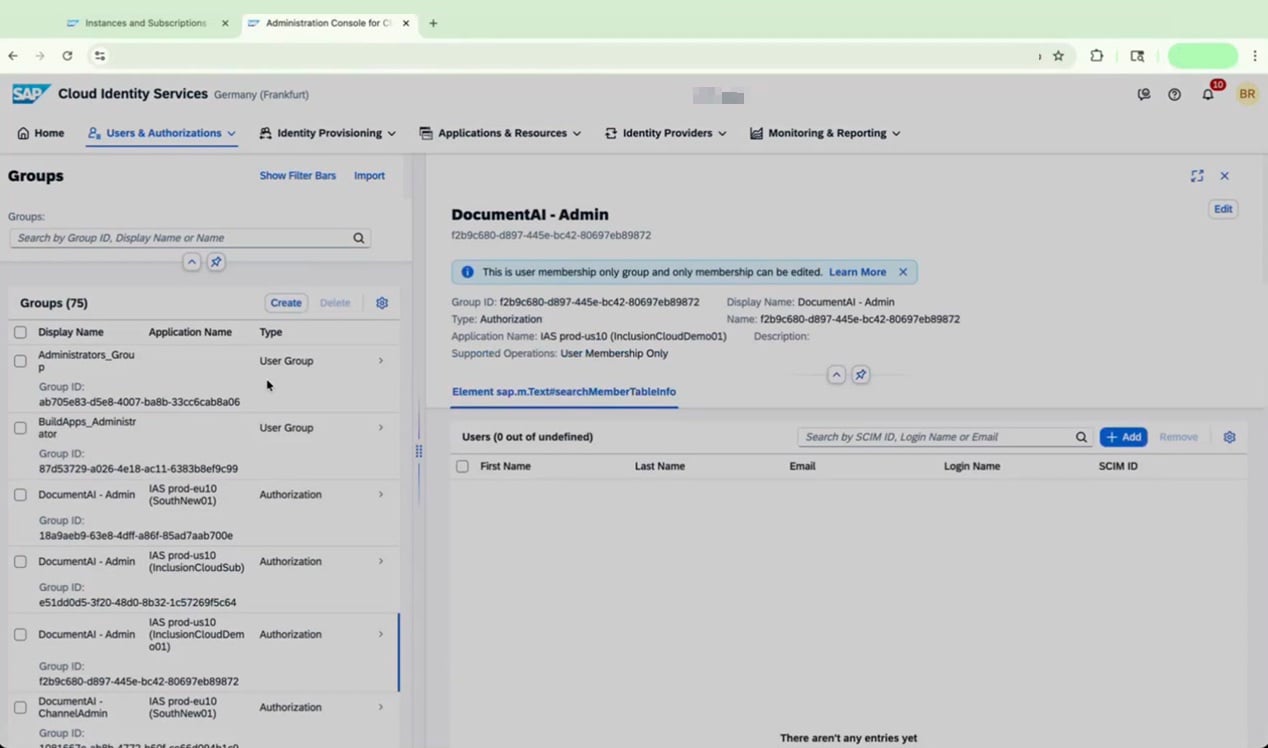
Step 5: In the groups list, find the group named DocumentAI - Admin associated with your application. Click on it to open the group details.
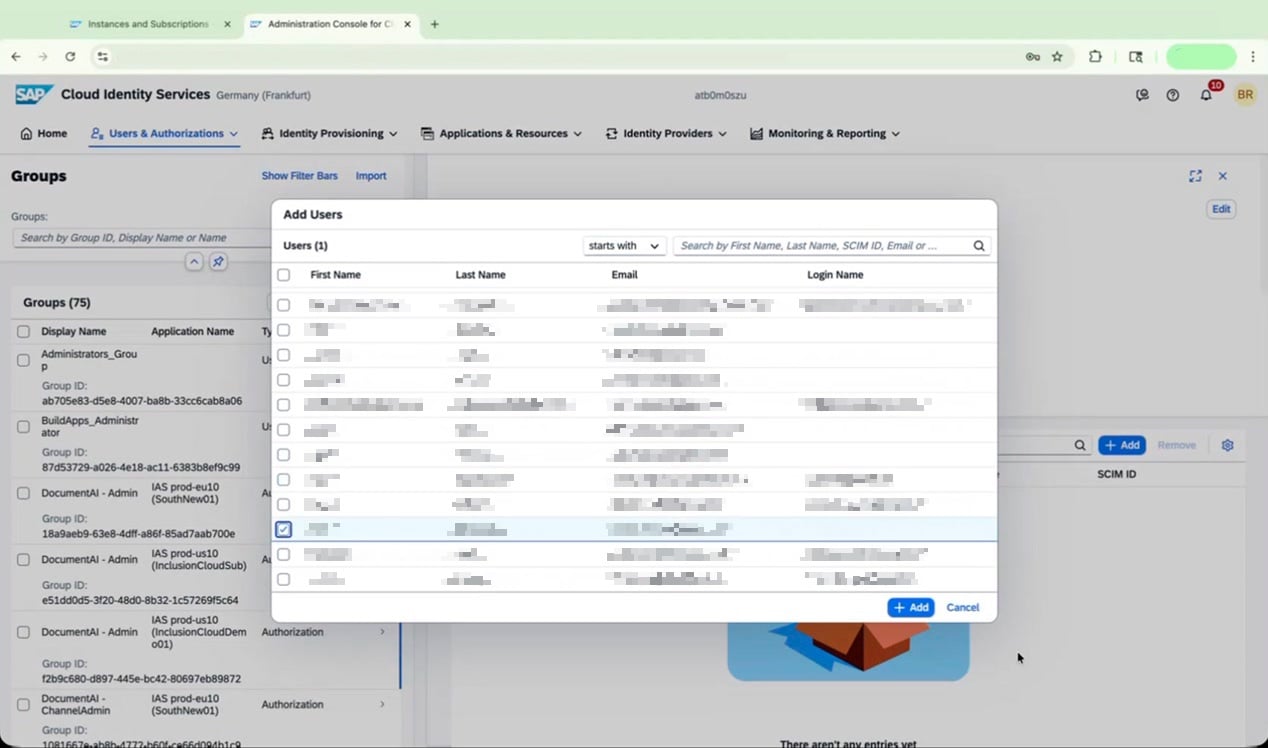
Step 6: In the Users section of the group, click Add. Search for your user, select them, and click Add to grant admin rights to SAP Document AI.
Step 7: Return to the SAP BTP Cockpit to check the status of your instance and subscription.
Adding users and assigning role collections
With admin access configured in IAS, the next step is to add your user to the SAP BTP subaccount and assign the Document AI role collections.
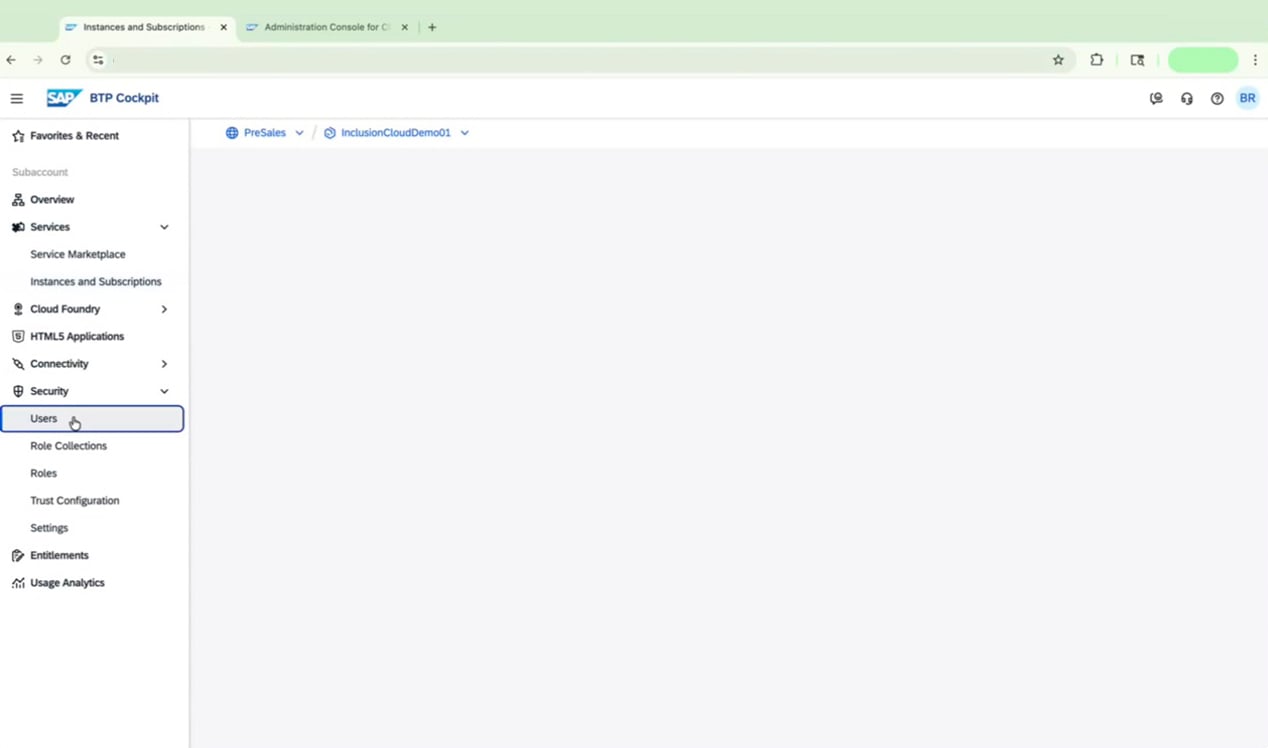
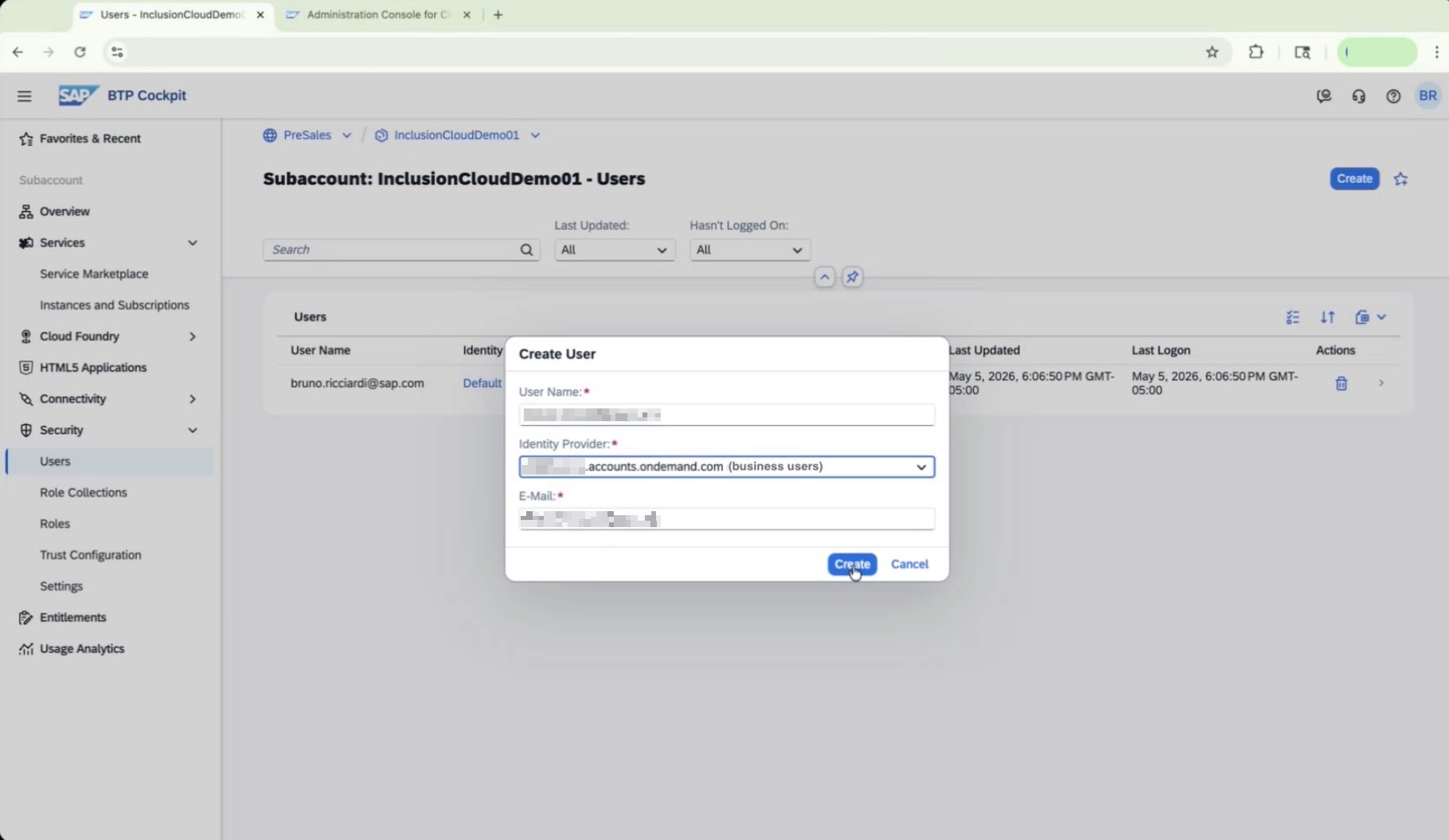
Step 1: In SAP BTP Cockpit, go to Security > Users in the left navigation menu.
Step 2: Click Create. In the “Create User” dialog, enter the following and then click Create:
| Field | Value |
|---|
| User Name | Your user’s email address |
| Identity Provider | Your IAS tenant URL (business user) |
| E-Mail | Your user’s email address |
⚠️ Warning: It is important that you certify that you are creating it as Business User rather than platform user in order to have access to the live application.
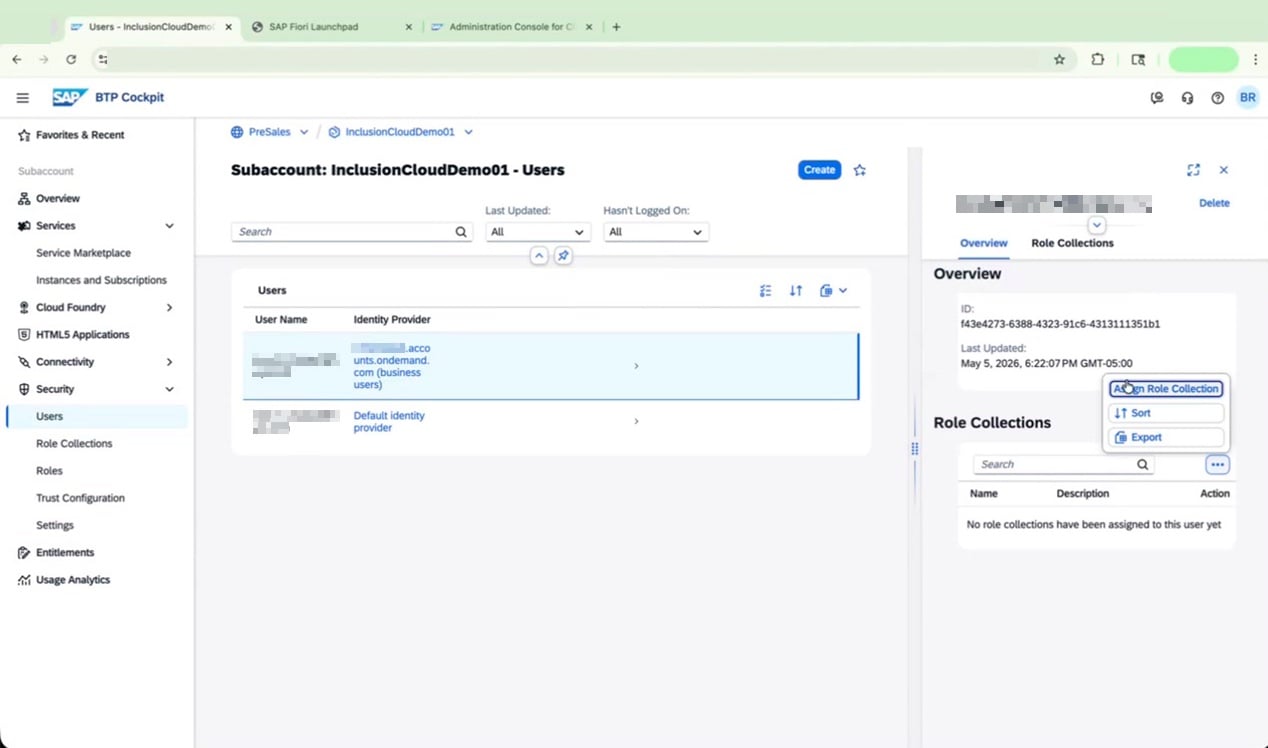
Step 3: Locate the newly created user in the list and open their details and click to select. A panel appears on the right side of the screen where you should locate “Role Collections”. Click Assign Role Collection under the three dots menu.
Select the following three role collections:
Document_Information_Extraction_UI_Document_Viewer
Document_Information_Extraction_UI_End_User
Document_Information_Extraction_UI_Templates_Admin
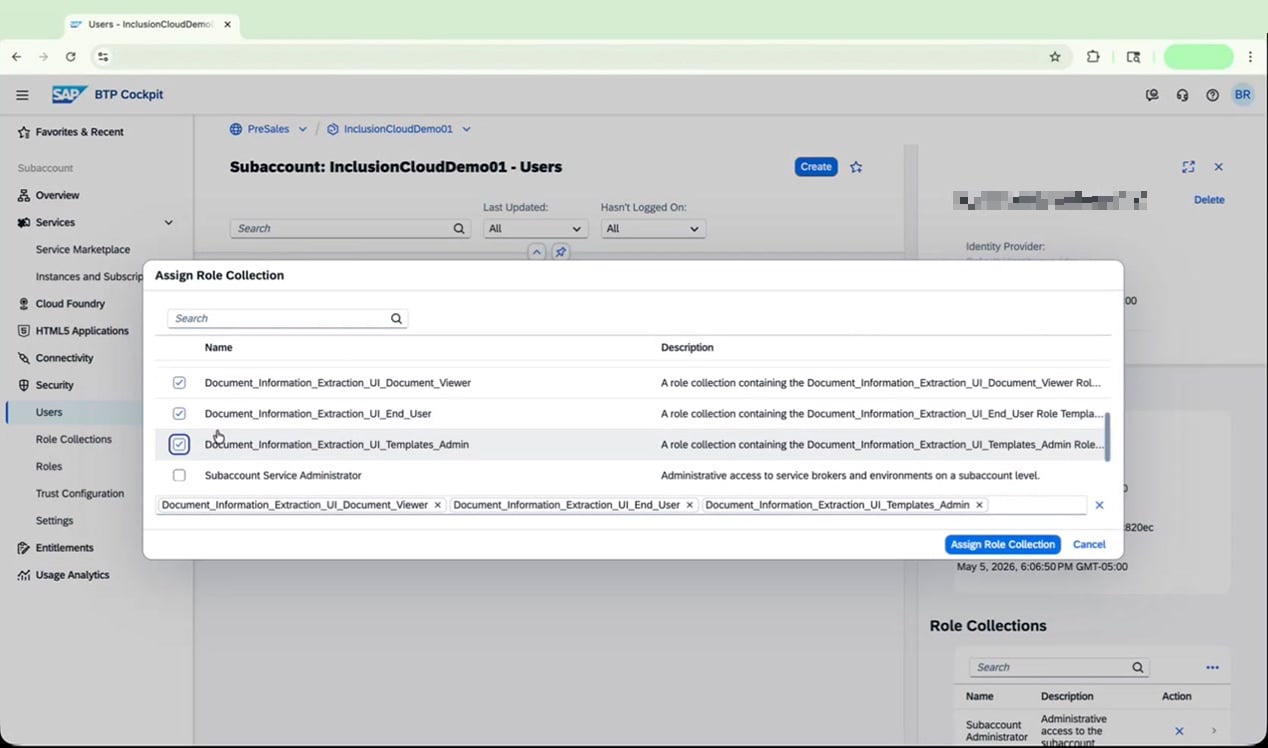
Click Assign Role Collection to apply.
Step 4: If you have multiple users (for example, one using IAS and one using the default identity provider), repeat the role assignment for each user.
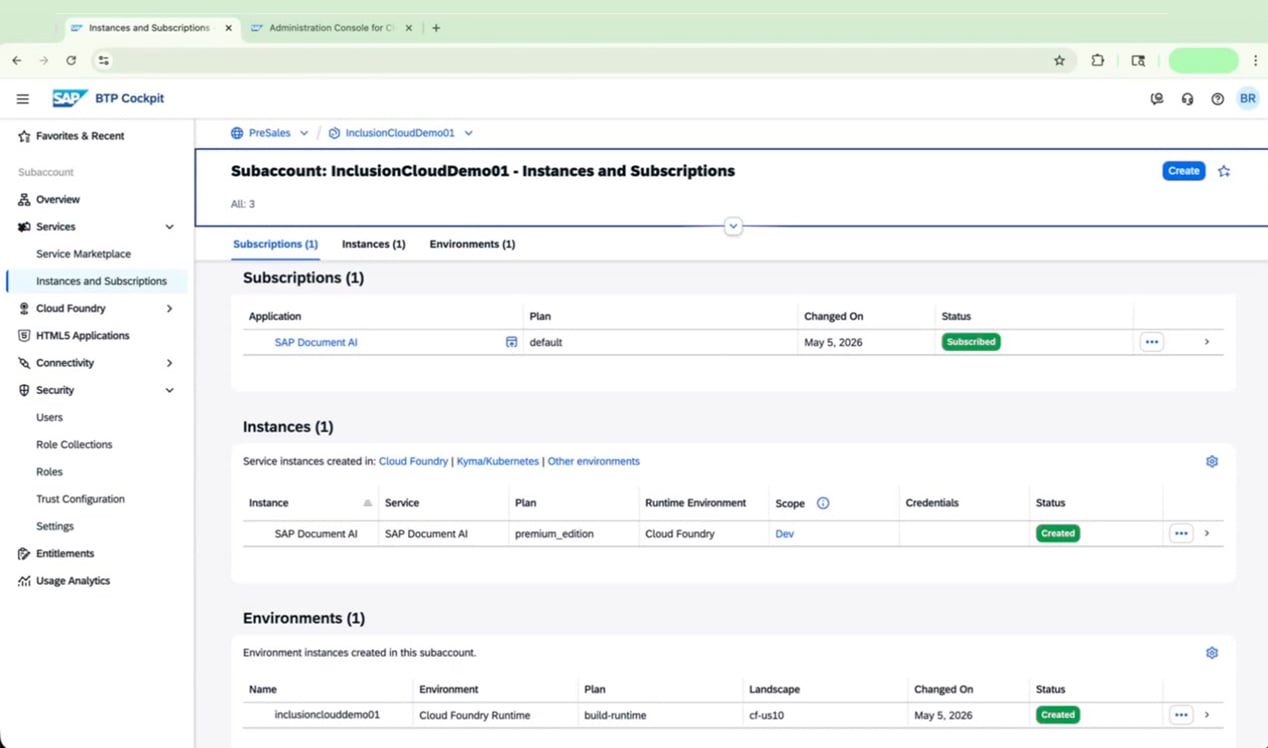
Step 5: Go to Services > Instances and Subscriptions and verify the current status:
- Subscriptions: SAP Document AI | Plan: default | Status: Subscribed
- Instances: SAP Document AI | Plan: premium_edition | Runtime: Cloud Foundry | Scope: Dev | Status: Creation in Progress (wait for this to reach Created before accessing the application)
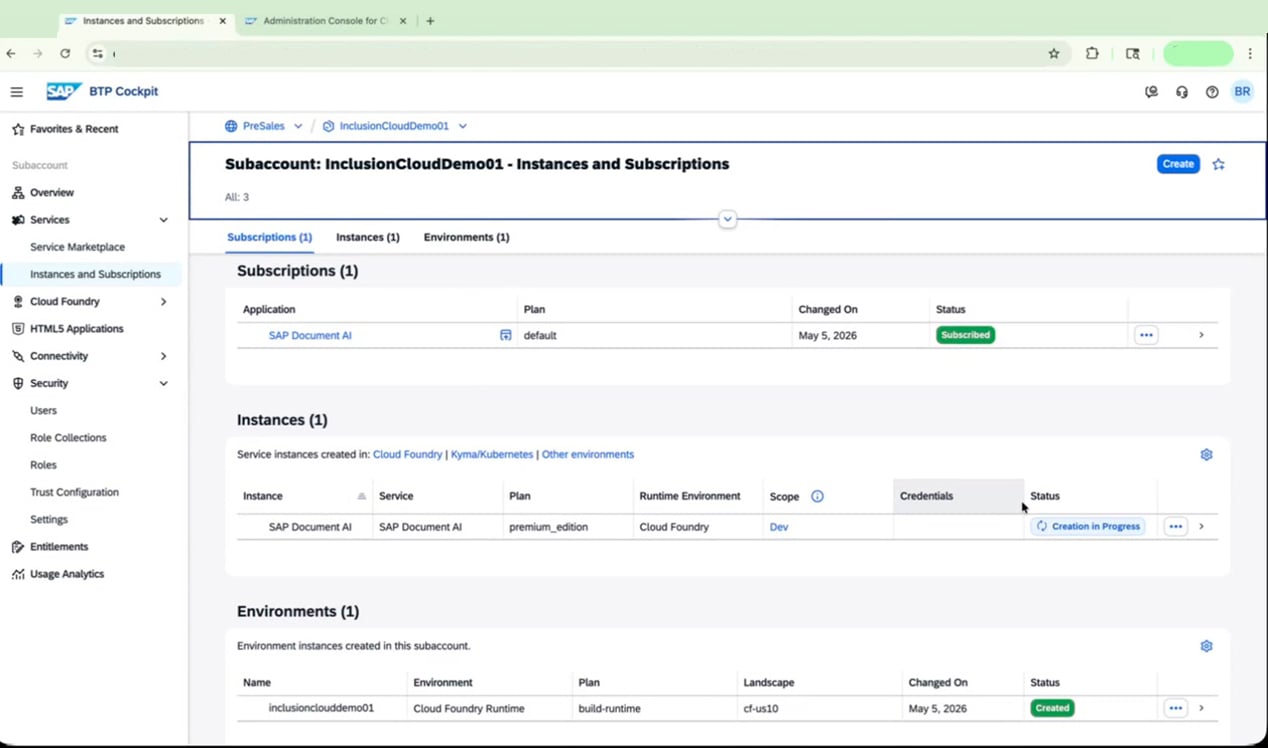
Warning: Do not attempt to open the SAP Document AI application until the service instance status shows Created. Accessing it too early will result in errors.
Troubleshooting permission denied errors
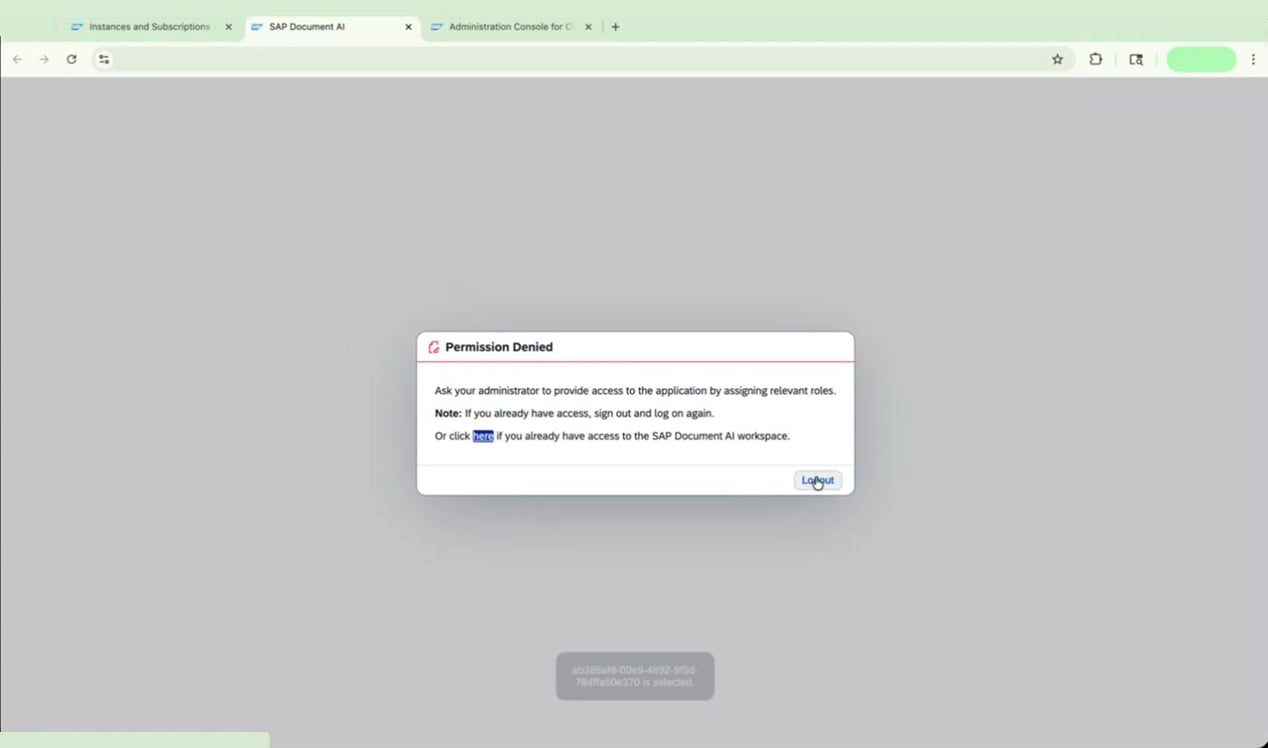
Even after assigning role collections, you may encounter a “Permission Denied” error when first opening the SAP Document AI workspace. This section walks you through resolving it.
Step 1: Once the instance status shows Created, confirm the subscription is also Subscribed on the Instances and Subscriptions page.
Step 2: Open the SAP Document AI workspace URL. If the screen loads blank or you see a Permission Denied dialog, don’t worry — this is a common issue related to identity provider mismatches.
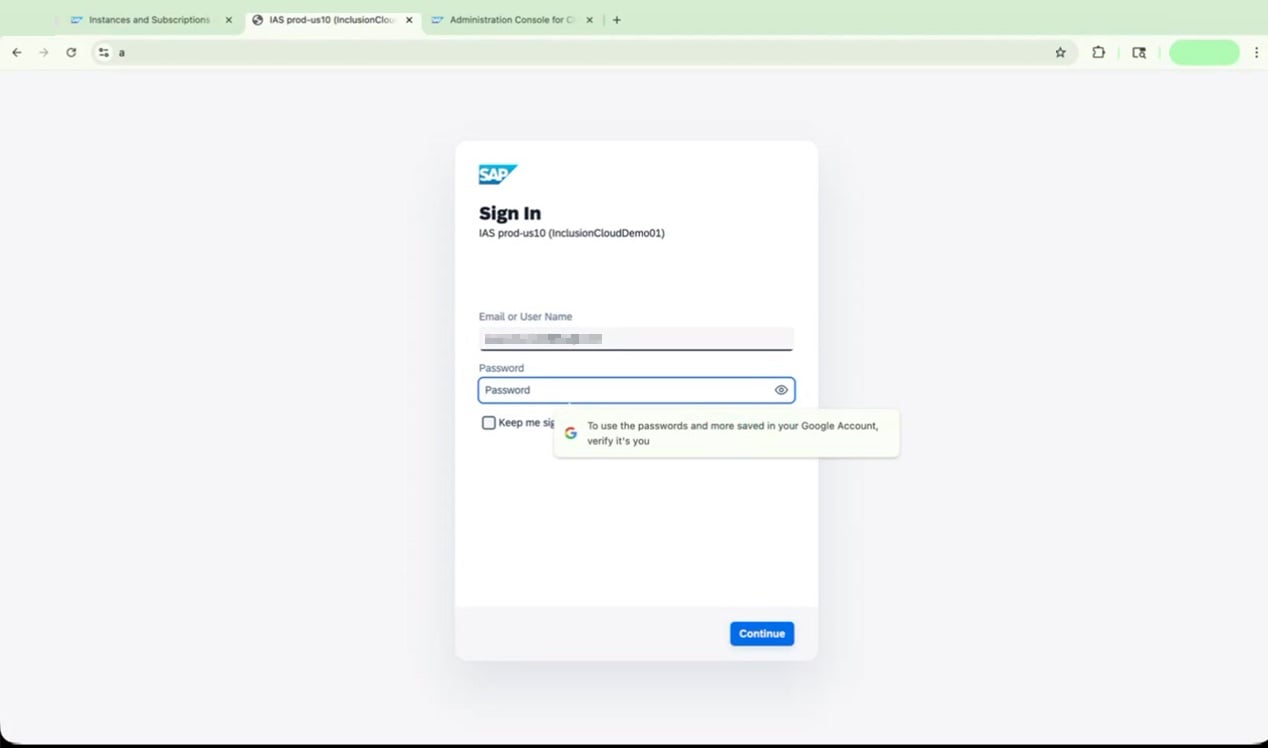
Step 3: Return to the SAP BTP Cockpit tab and re-authenticate if needed. When prompted, sign in using the correct identity provider credentials.
Step 4: If the Permission Denied error persists after signing in, navigate to Security > Users in SAP BTP Cockpit and check which identity provider is listed for your user.
Step 5: If the user is associated with the wrong identity provider, delete that user entry and confirm the deletion.
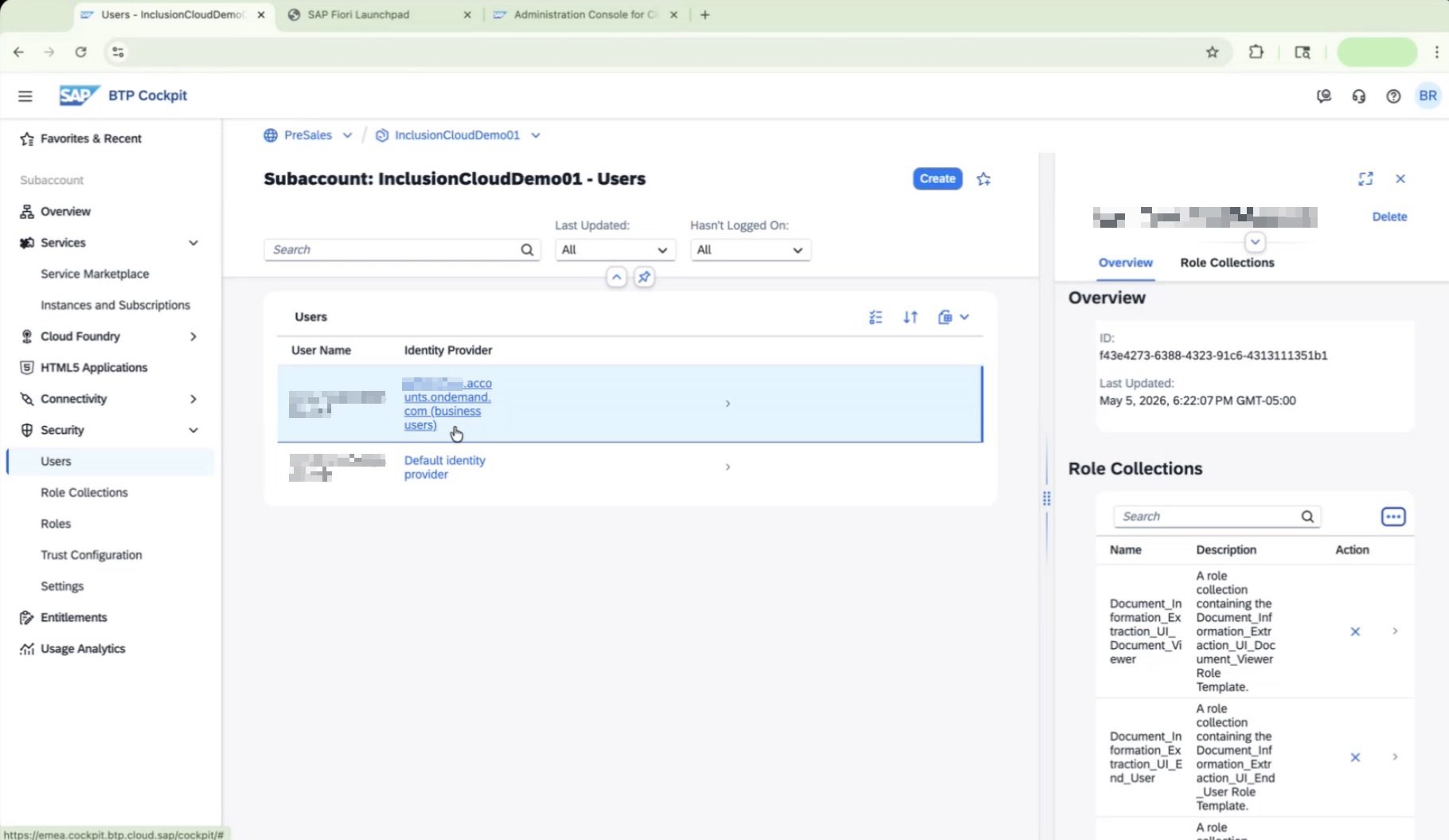
Step 6: Select the correct user under the business users identity provider. Open their details pane, click Add Role Collection, and assign the required Document AI role collections.
Step 7: Verify that the following role collections now appear under the business user’s profile:
Document_Information_Extraction_UI_Document_Viewer
Document_Information_Extraction_UI_End_User
Document_Information_Extraction_UI_Templates_Admin
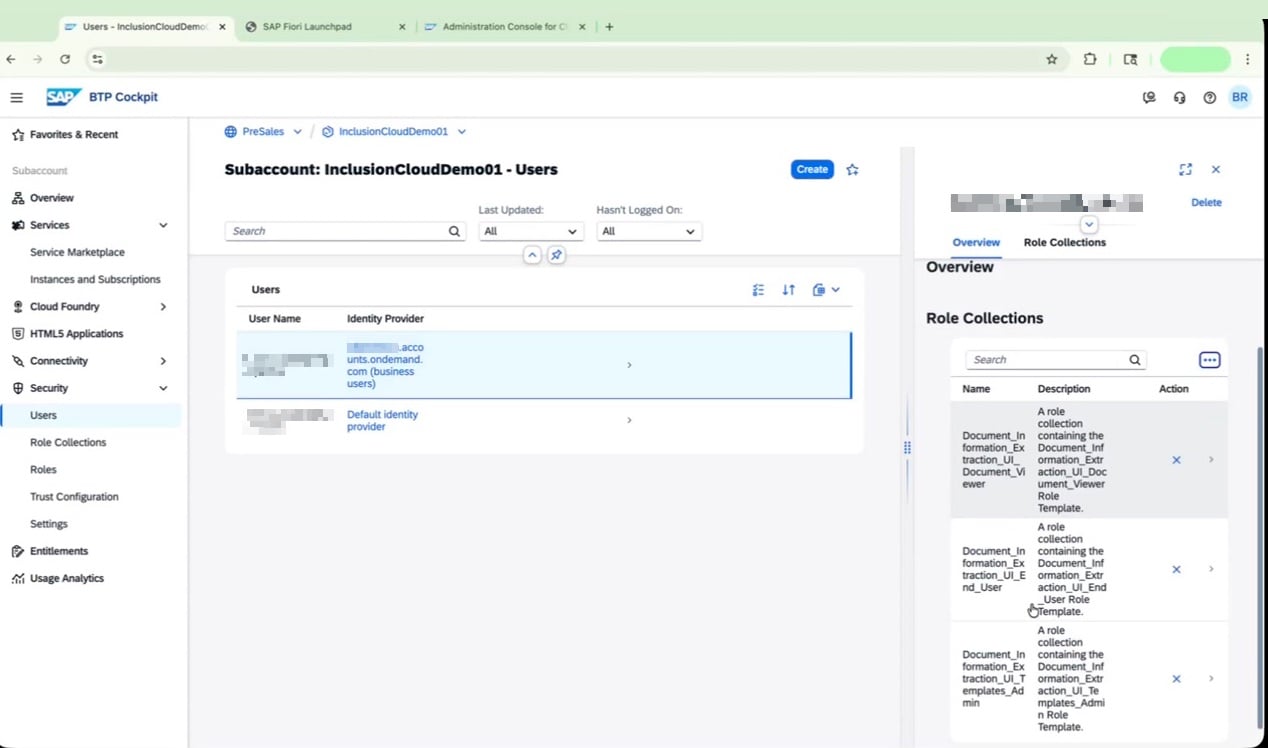
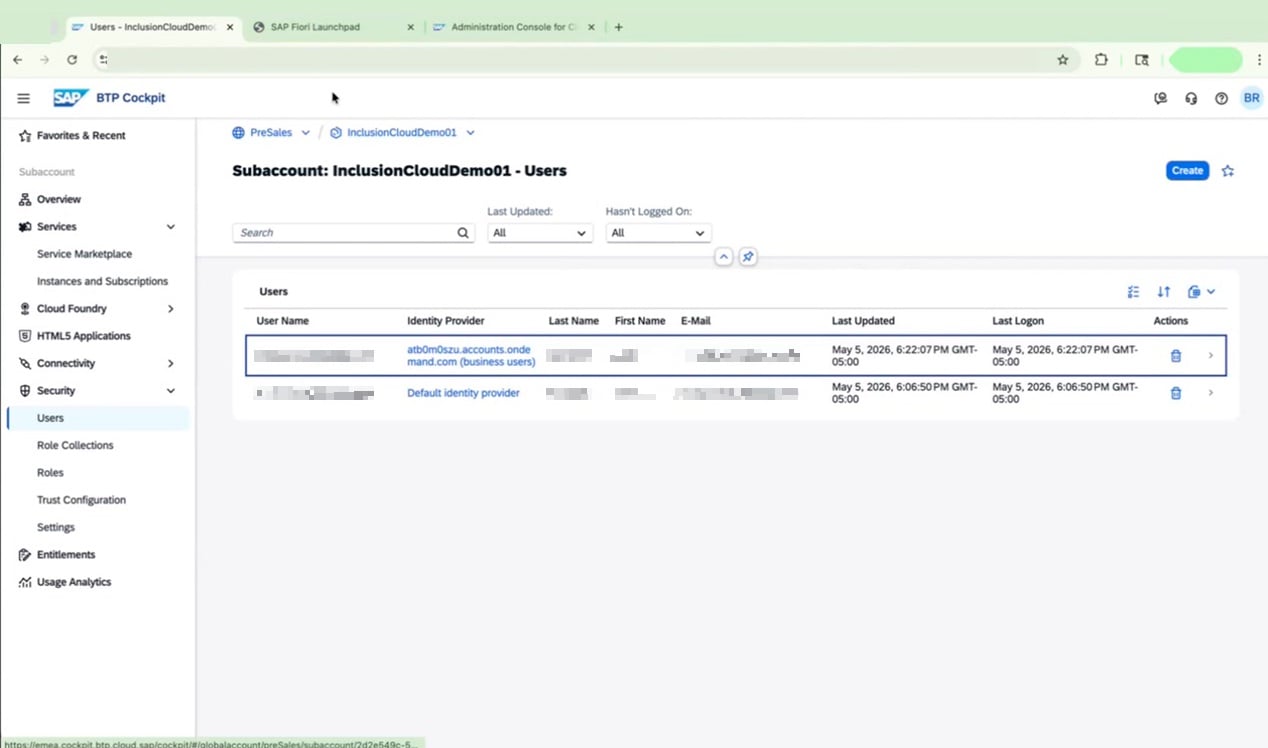
Step 8: Confirm that the user with the assigned role collections is using the business users identity provider, not the default identity provider.
Note: A “Permission Denied” error after login almost always means the role collections are assigned to a user under the wrong identity provider. Deleting the incorrect user entry and reassigning roles under the business users provider resolves this.
You’re now ready to move on to accessing and using the SAP Document AI application.
Chapter 3: Finalizing your SAP Document AI configuration
With the core setup complete, this chapter walks you through the final configuration steps inside the SAP Document AI interface — including document retention, instant learning, and data feedback settings — and shows you how to review user access in the SAP BTP Cockpit.
Logging in and navigating the interface
Step 1: From your BTP Cockpit subaccount applications and subscriptions, you can access the SAP Document AI application.
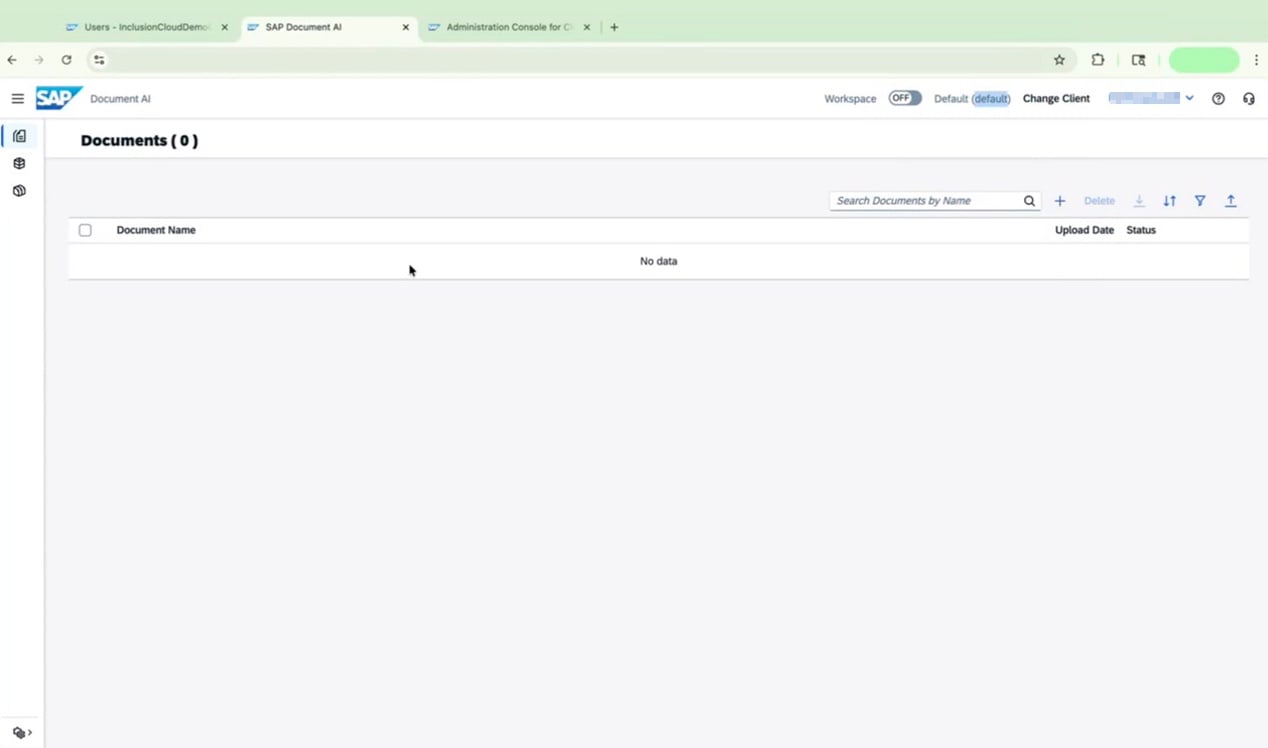
Step 2: Once logged in, navigate to the SAP Document AI interface. You may initially land on the old UI, which displays a simple document list with limited options. To access the full feature set, click Workspace to switch to the new UI.
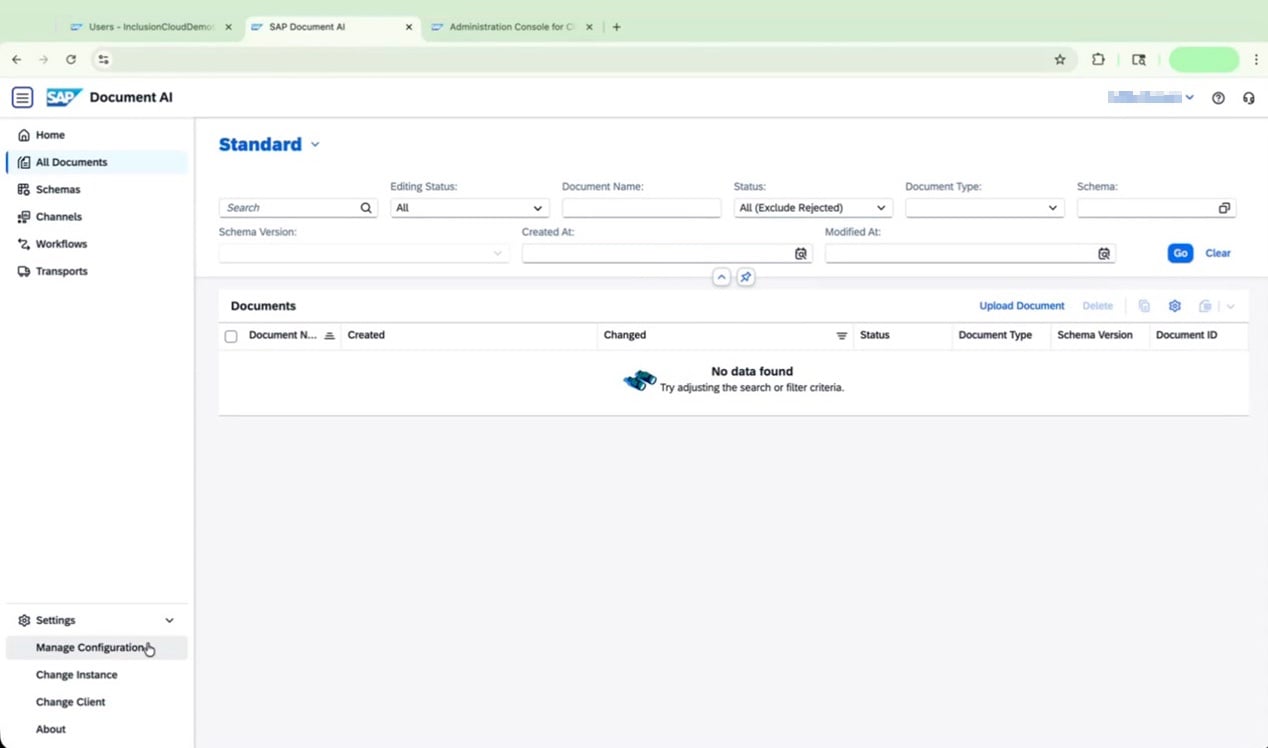
Step 3: The new UI presents a more modern interface with a sidebar on the left and a blank workspace area. Sidebar options include All Documents, Schemas, Channels, Workflows, and Transports.
Opening the configuration screen
Step 4: In the sidebar, click All Documents to explore document management features. You can use the search and filter options at the top to locate specific documents. If no documents are found, the system will prompt you to adjust your search or filter criteria.
Step 5: At the bottom left of the sidebar, click Settings and then select Manage Configuration to open the configuration screen.
Configuring document retention, learning, and feedback
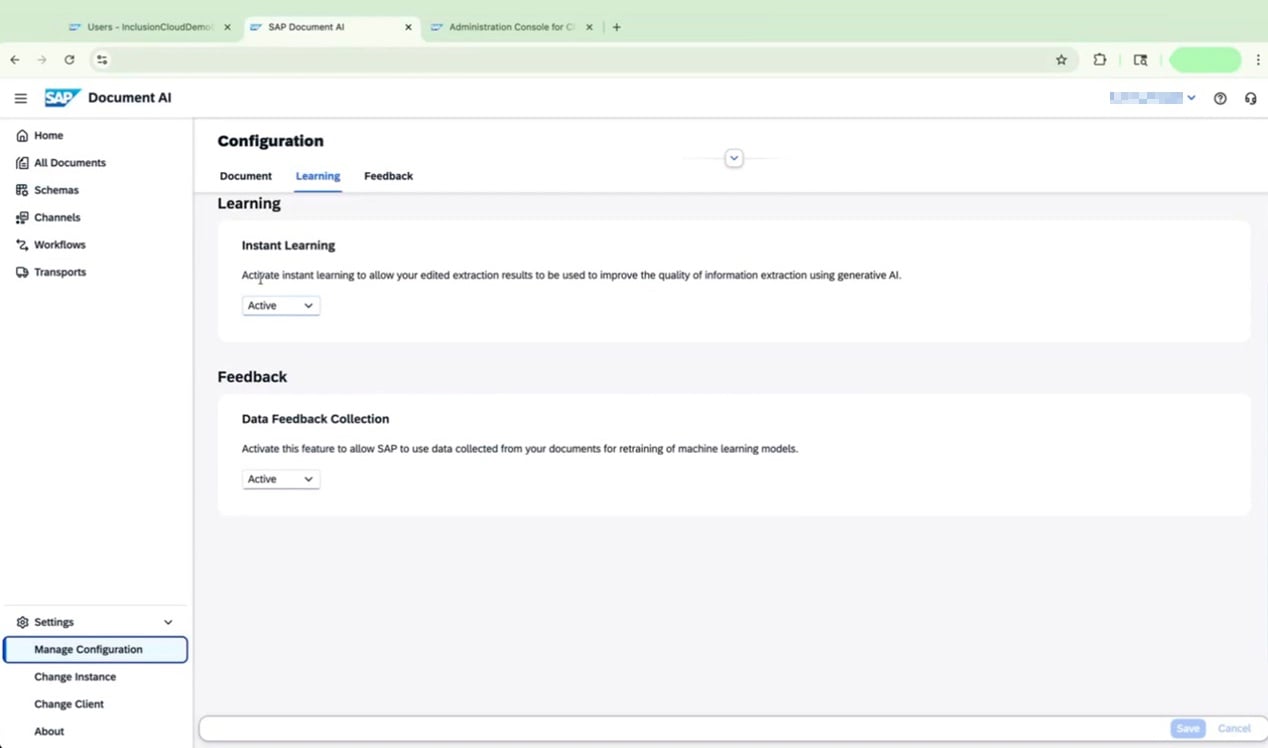
The configuration screen has three key settings to review: document retention, instant learning, and data feedback collection.
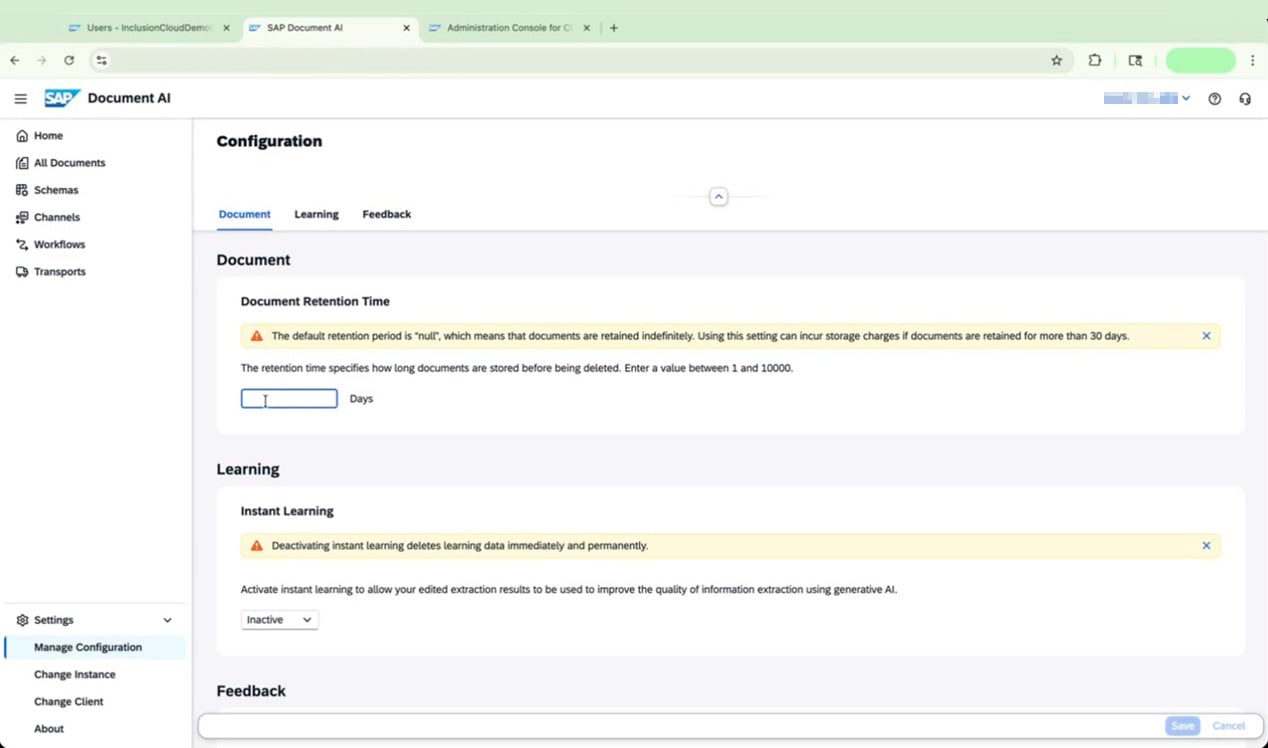
Step 6: Under Document Retention Time, enter the number of days you want documents to be retained (between 1 and 10,000).
Note: For our new environment, we will use 365 days.
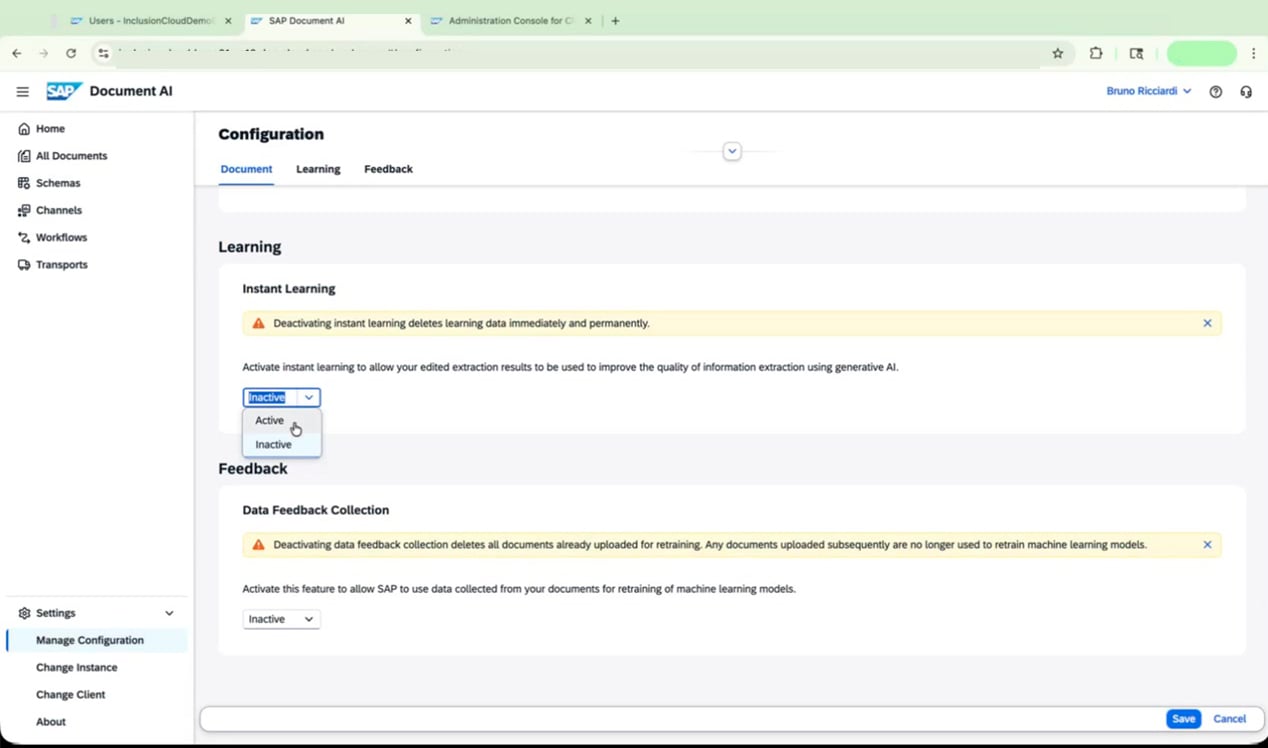
Step 7: Under Learning, find the Instant Learning dropdown and select Active.
Note: Activating Instant Learning allows edited extraction results to improve information extraction using generative AI. Deactivating this setting deletes all learning data immediately and permanently.
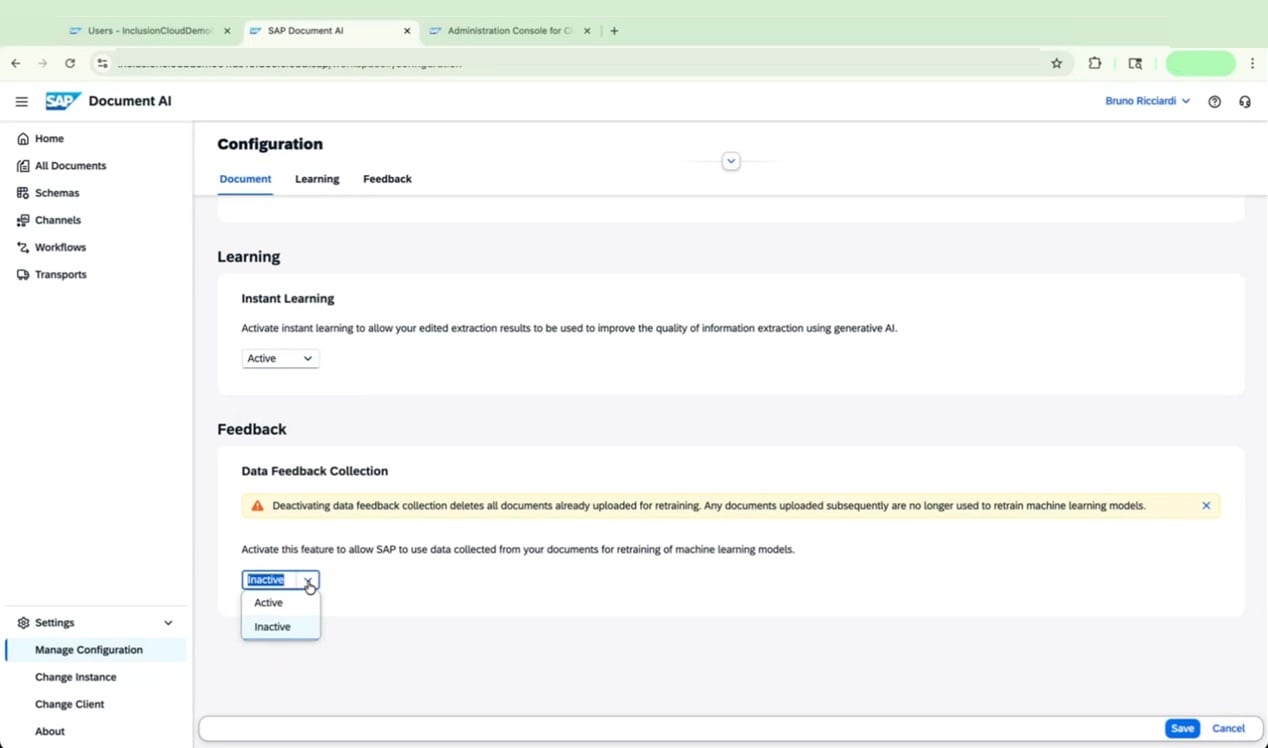
Step 8: Under Feedback, find the Data Feedback Collection dropdown and select Active.
Note: Activating Data Feedback Collection allows SAP to use your document data for retraining machine learning models. Deactivating this setting deletes all documents already uploaded for retraining.
Saving and confirming your settings
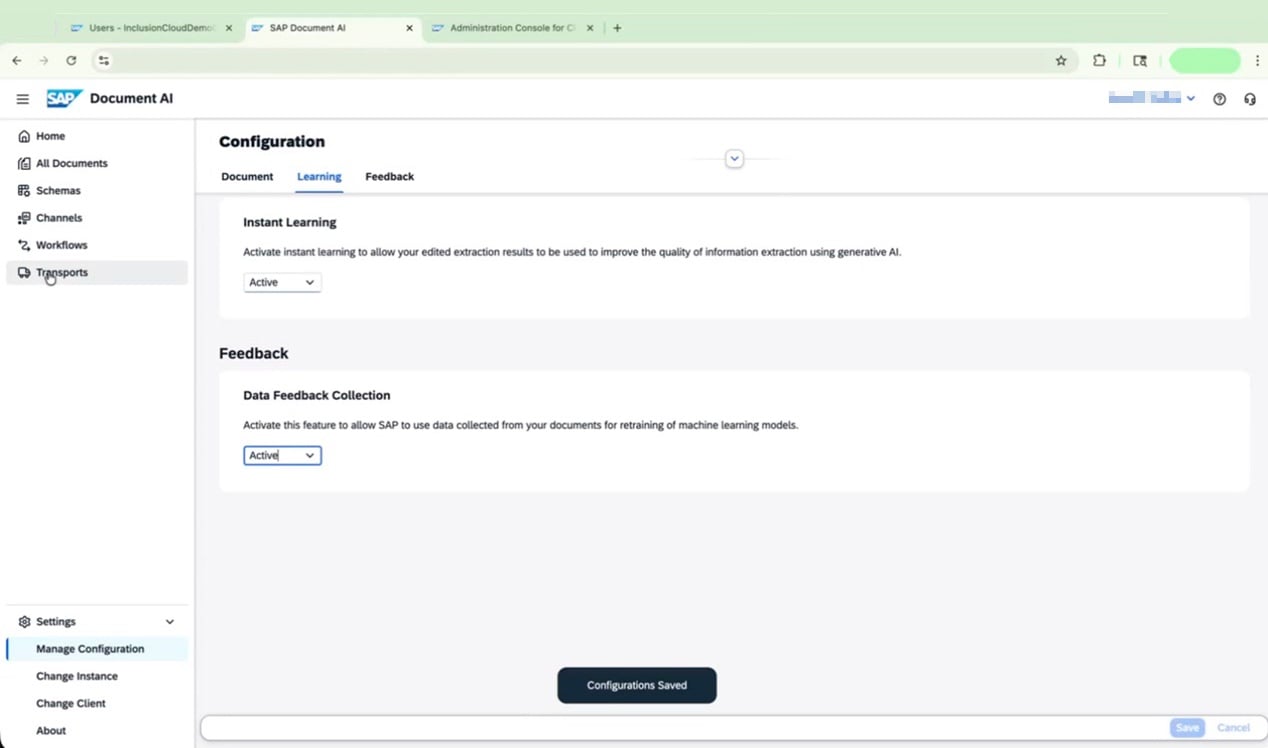
Step 9: Click the Save button at the bottom right of the configuration screen. Wait for the Configurations Saved confirmation message to appear before navigating away.
Step 10: Review your saved settings to confirm everything is configured as intended. You can also browse the Schemas section in the sidebar to review the schemas provided by SAP.
Reviewing user access in SAP BTP Cockpit
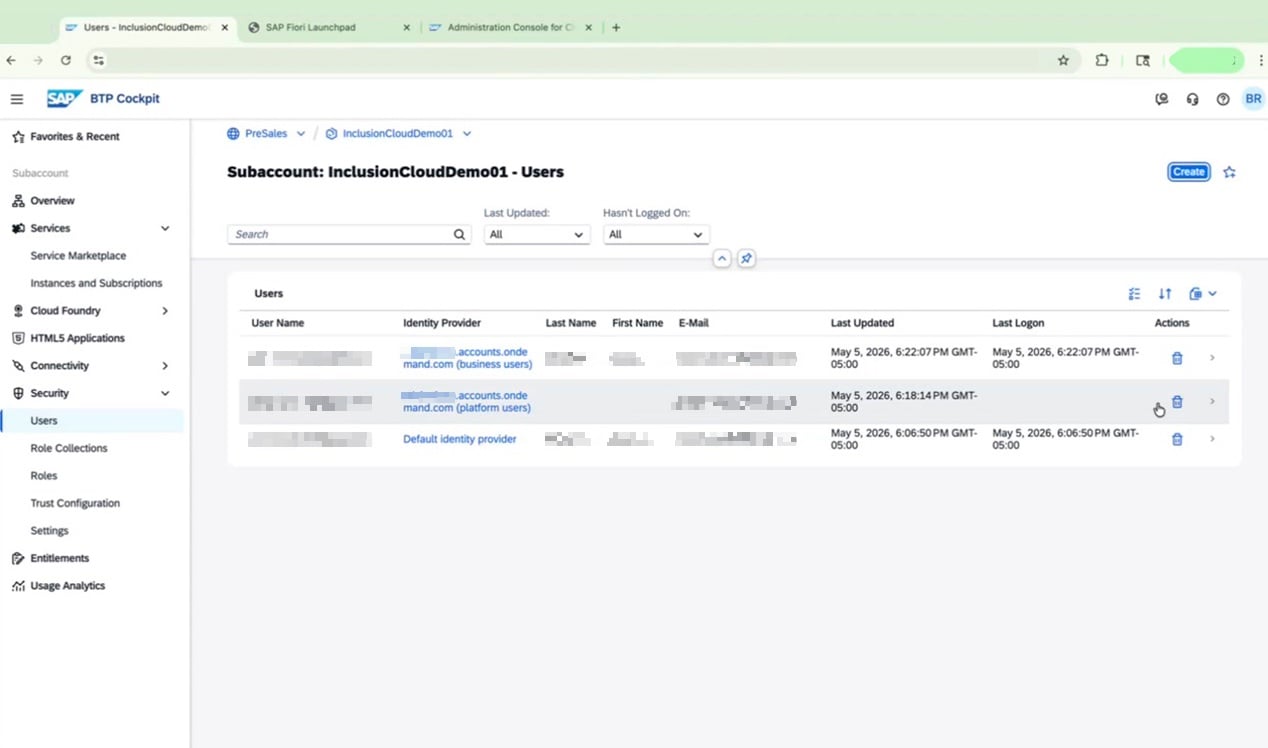
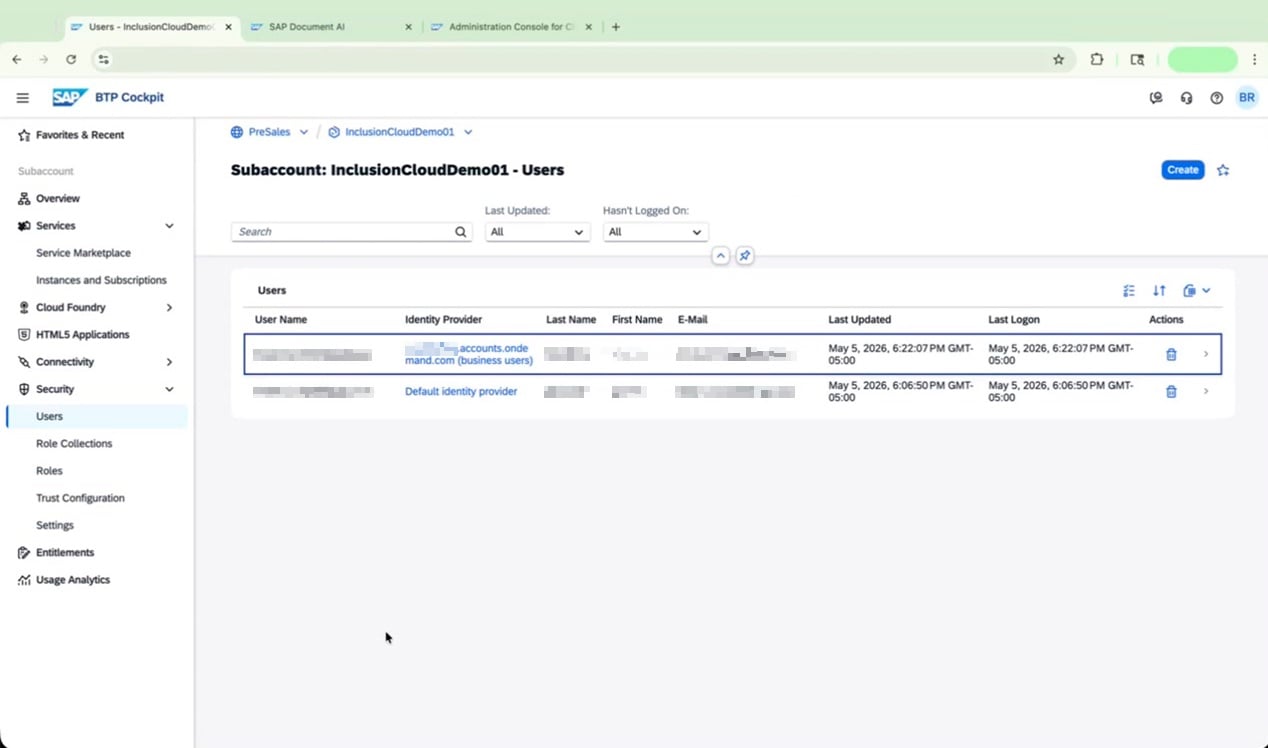
Step 11: Navigate to the SAP BTP Cockpit and open your subaccount. Go to Security > Users to review who has access to your environment.
Step 12: Verify the details shown for each user, including User Name, Identity Provider, Last Name, First Name, E-Mail, Last Updated, and Last Logon. Confirm that only authorized users appear in the list.
Your SAP Document AI environment is now fully configured and ready for use. 🎉
Frequently Asked Questions
Q: What SAP Document AI service plans are available, and which one should I choose?
Three plans are available: blocks_of_100, default, and premium_edition. For the service instance, select premium_edition. For the application subscription, select default. Both are required for a complete setup.
Q: What should I do if I see a “You have already assigned all the available quota for this service plan” warning when adding entitlements?
This message means your global account has no remaining quota for that service plan. You must either purchase additional quota or release quota from another sub-account before you can proceed with adding the entitlement.
Q: Do I need to select a different SAP Document AI entitlement entry depending on my identity setup?
Yes. If your customer has IAS configured, select the entry whose name ends in -ias (for example, document-information-extraction-application-ias) and choose the premium_edition plan. If IAS is not configured, select the entry without the -ias suffix.
Q: How long does it take for the service instance and application subscription to become active, and can I proceed before they finish?
Provisioning can take up to 30 minutes. You must wait until both the service instance shows Created and the subscription shows Subscribed before attempting to access the SAP Document AI application. Accessing the application too early will result in errors.
Q: Why am I getting a “Permission Denied” error after logging in, even though I’ve assigned role collections?
This almost always means the role collections are assigned to a user under the wrong identity provider. Check the user’s identity provider in Security > Users in the SAP BTP Cockpit. If the user is listed under the wrong provider, delete that user entry and reassign the required role collections to the user under the business users identity provider.
Q: What are the three role collections required for SAP Document AI access?
The following three role collections must be assigned: Document_Information_Extraction_UI_Document_Viewer, Document_Information_Extraction_UI_End_User, and Document_Information_Extraction_UI_Templates_Admin.
Q: What happens if I deactivate Instant Learning or Data Feedback Collection after they have been enabled?
Deactivating Instant Learning deletes all learning data immediately and permanently. Deactivating Data Feedback Collection deletes all documents already uploaded for retraining. Both actions are irreversible, so exercise caution before changing these settings.
Q: Are there any storage cost implications for the Document Retention Time setting?
Yes. The default value is “null,” which retains documents indefinitely. Retaining documents for more than 30 days may incur storage charges. Set a specific retention period (between 1 and 10,000 days) based on your organization’s requirements and cost considerations.